sehyeonjin.com

Spotify for the Hard-of-Hearing

App Redesign

Project Overview

Make People with hearing loss Enjoy Music on Spotify

Most people love music and hard of hearings do too. However, Spotify and other music streaming services don’t have any features for people with hearing loss who can enjoy music.

Project

Team Project

My Role

UX/UI Designer,
UX Researcher

Duration

6 weeks

Tools

Figma, Miro, After Effect

Objective

How might we support hard of hearing people to feel and enjoy music on Spotify, and give richer music experience to them.

Solution

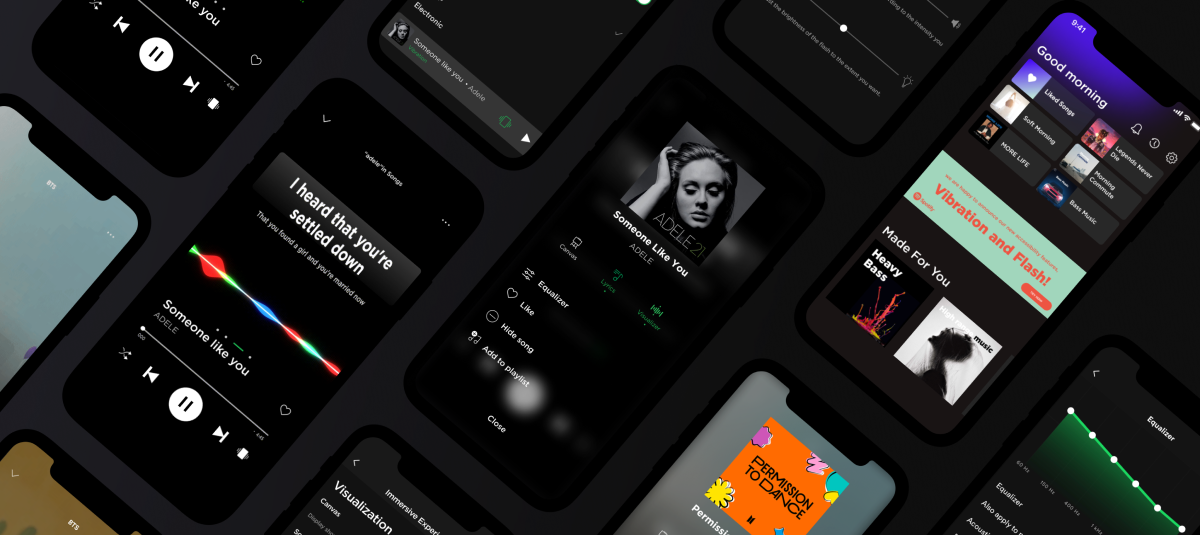
We redesigned Spotify player with visualizer, vibration and flash features to give more music experiences and improved structures of settings for accessibility.

Key Features

Visualization

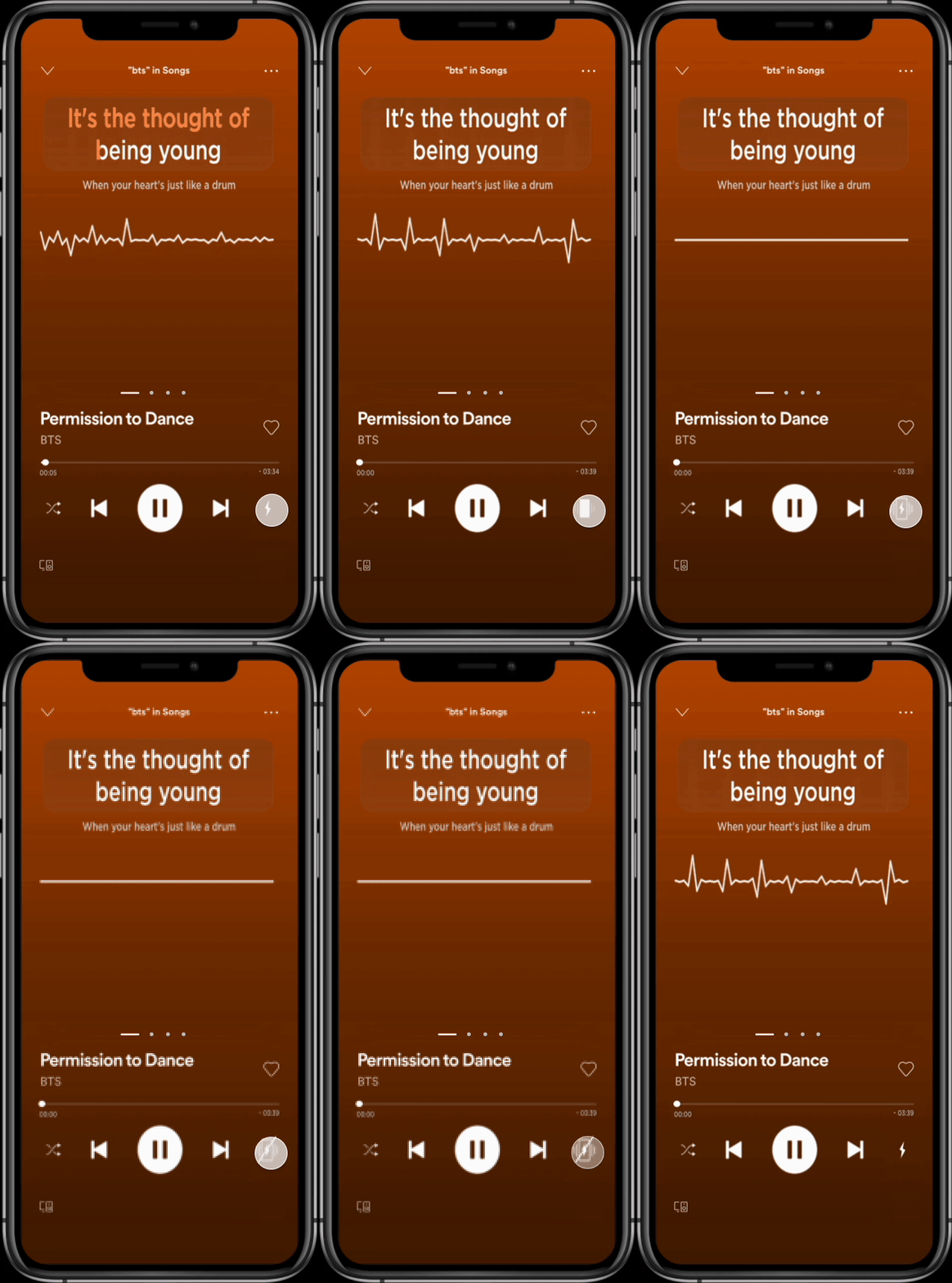
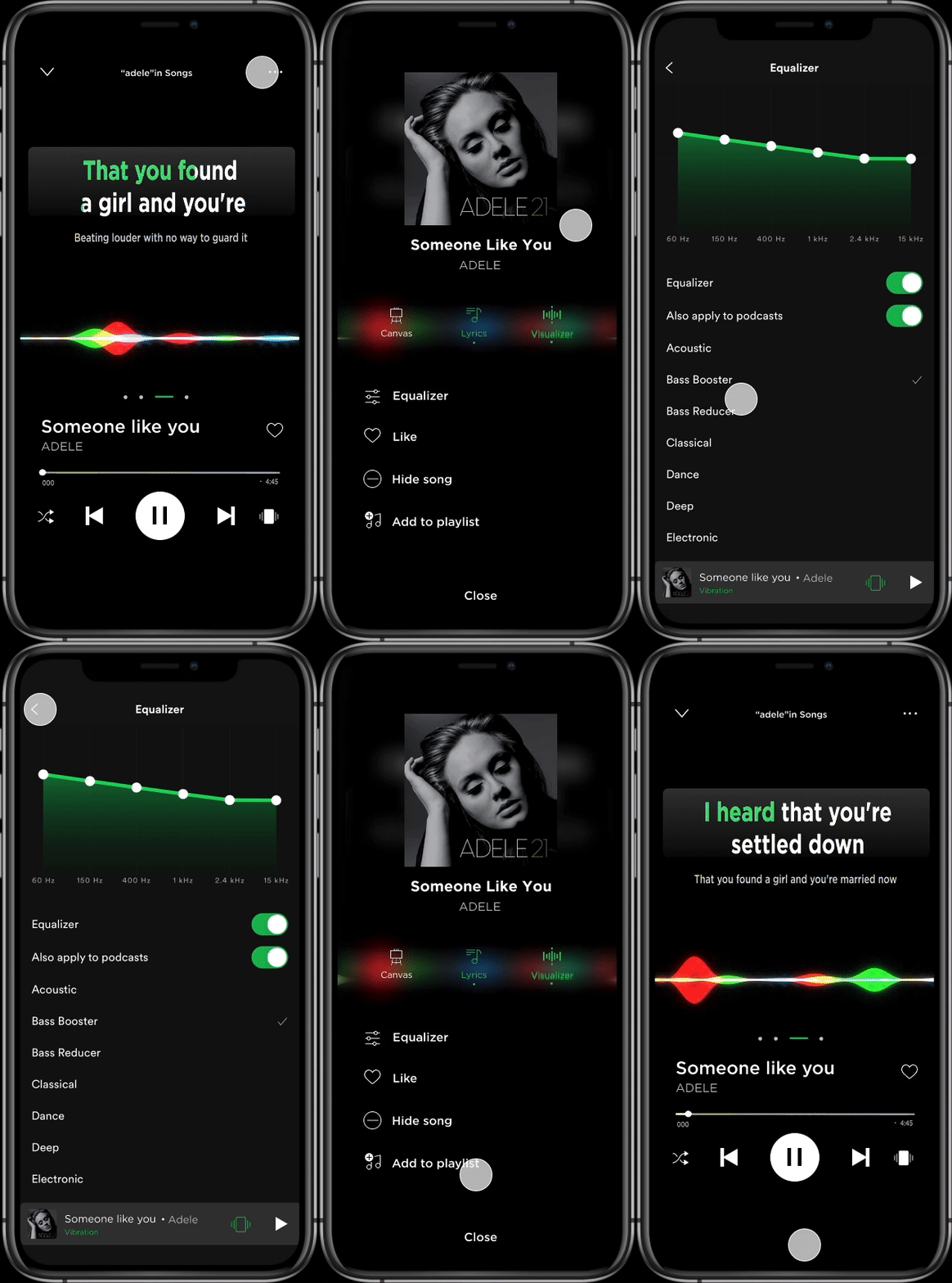
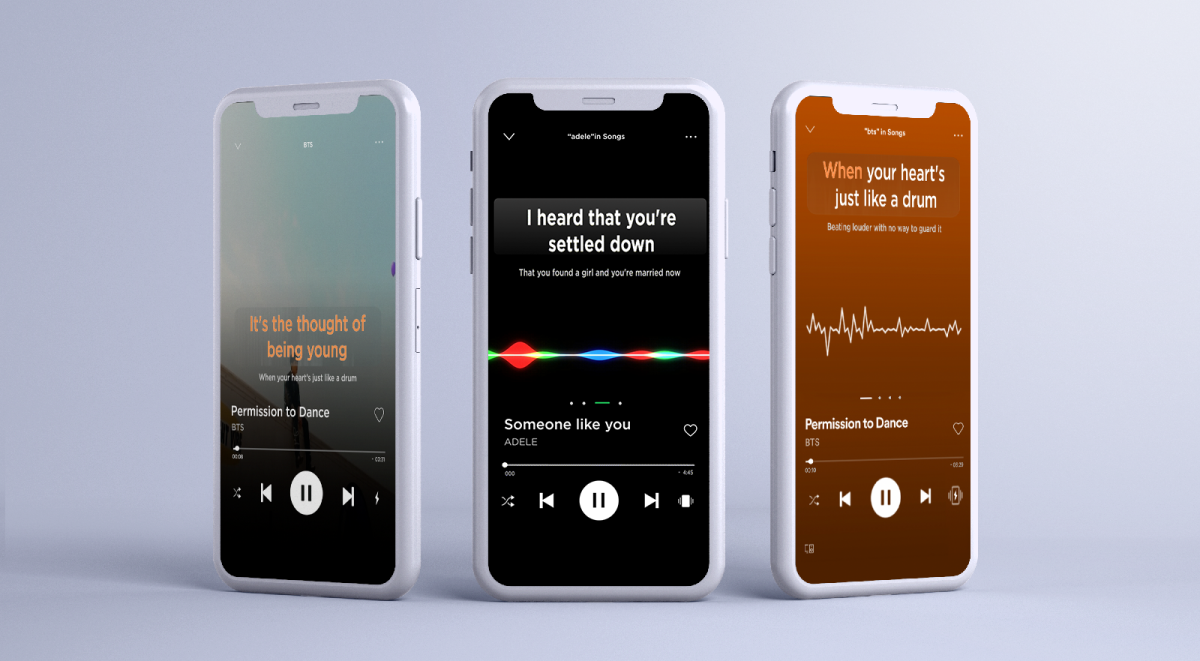
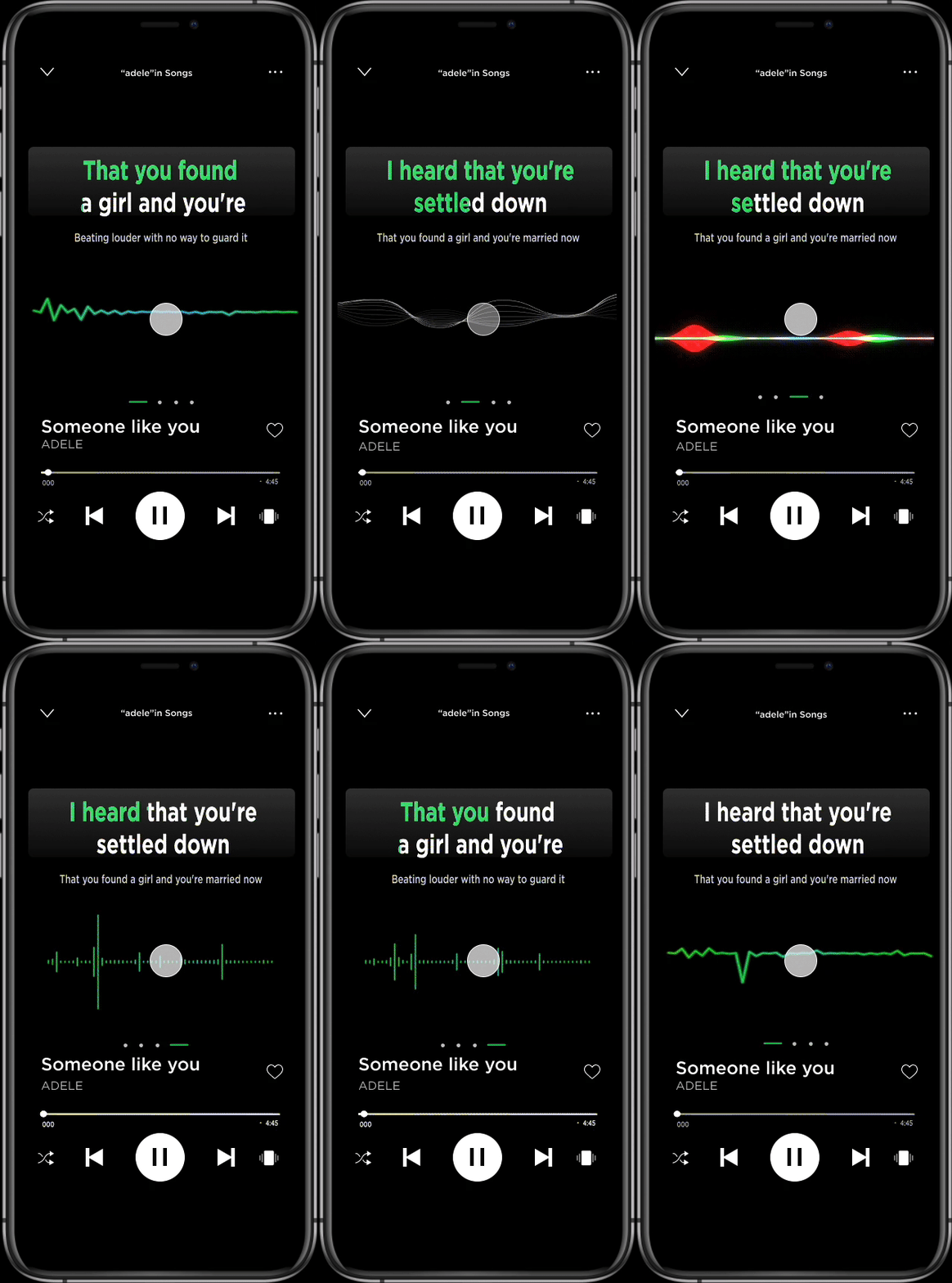
We offered new player design with sound visualizers. This feature would help users feel and enjoy music visually. There are four visualizers in this feature - Line, Wave, Color and Bar.

Vibration and Flash

People with hearing loss do enjoy music through powerful low-frequency sounds vibrations and lights. For that reason, we offered them vibration and flash features on Spotify player to enjoy music.

Karaoke-style Floating Lyrics

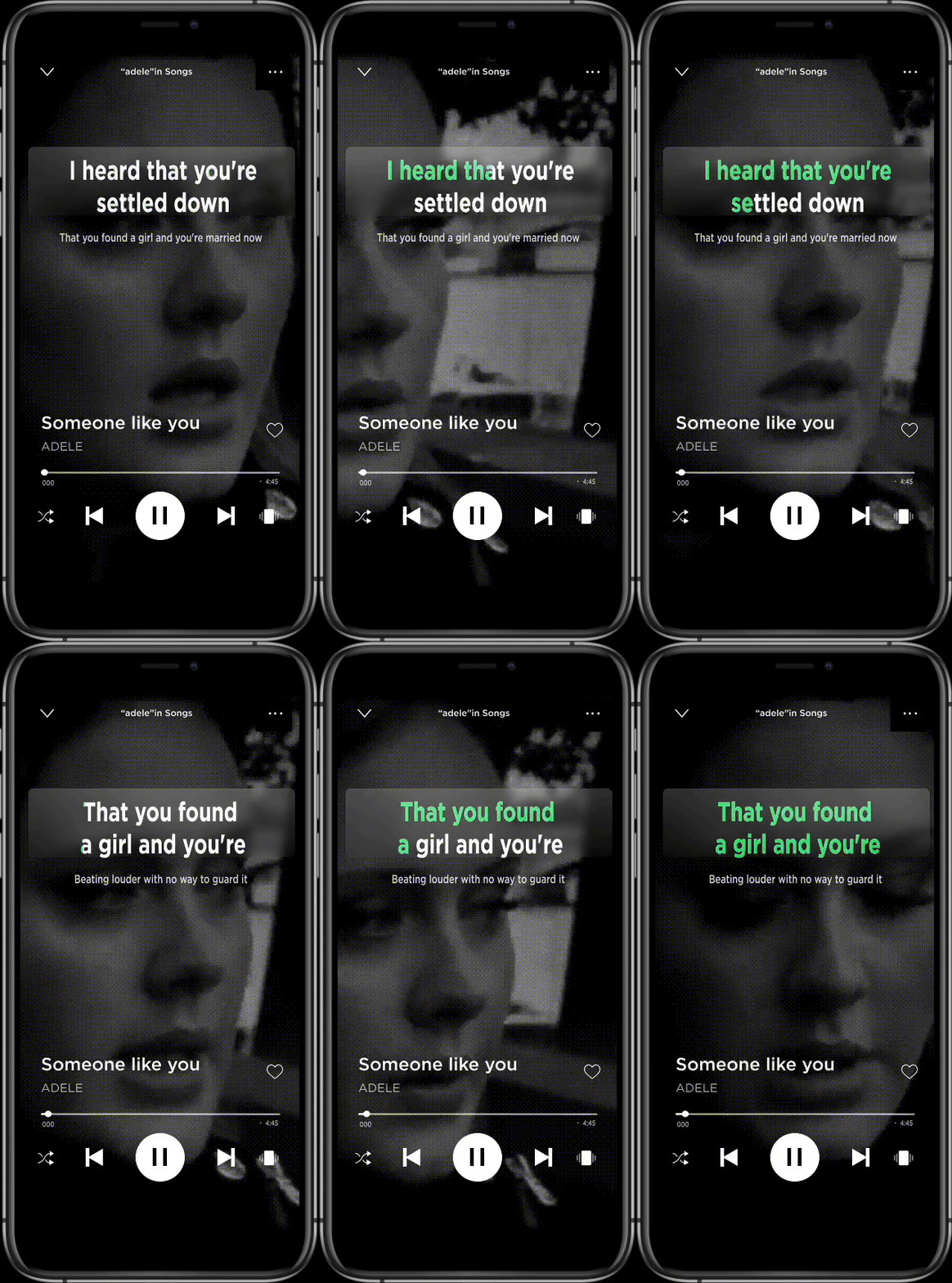
Synced lyrics are already available on Spotify but it is not a ‘real time’ synced. We redesigned this synced lyrics to karaoke-style floating lyrics for people with hearing loss to provide more music experiences.

Project Process

Discover

Understanding The Problem

Humans love music. One day, we read an article about people with hearing loss do enjoy music even though they can’t listen to it well and it amazed us. As a music enthusiast personally, I believe music is for everyone and music streaming services, especially Spotify, may have a role to bring them a richer immersive experience of music.

How can we support the hard of hearing to enjoy music easily on Spotify.

Secondary research

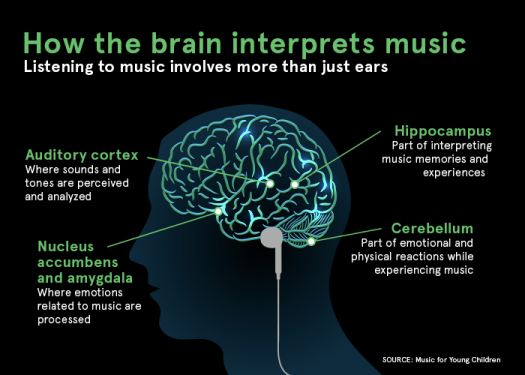
All sound is a vibration. No matter the level of a person’s hearing, other senses help to fill in the sound experience. While the auditory cortex translates the sounds your ears perceive and turns it into understanding music, hard of hearing people can take the sounds—as vibrations—to understand music as well.

Moreover, lyrics represent a key piece of music information hard of hearing people require of any visualization. According to research, the set of music visualizations tested convey some types of emotional information but do not obviously communicate the emotional component of the music.

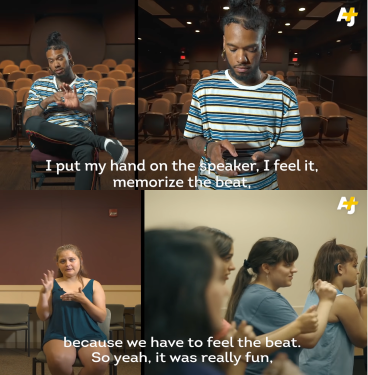
We also found a video that people with hearing loss actually do enjoy music through vibration and sign language. People with hearing aid listen music putting their hand on the speaker of their phone and feeling the beat and lyrics.

Immersion

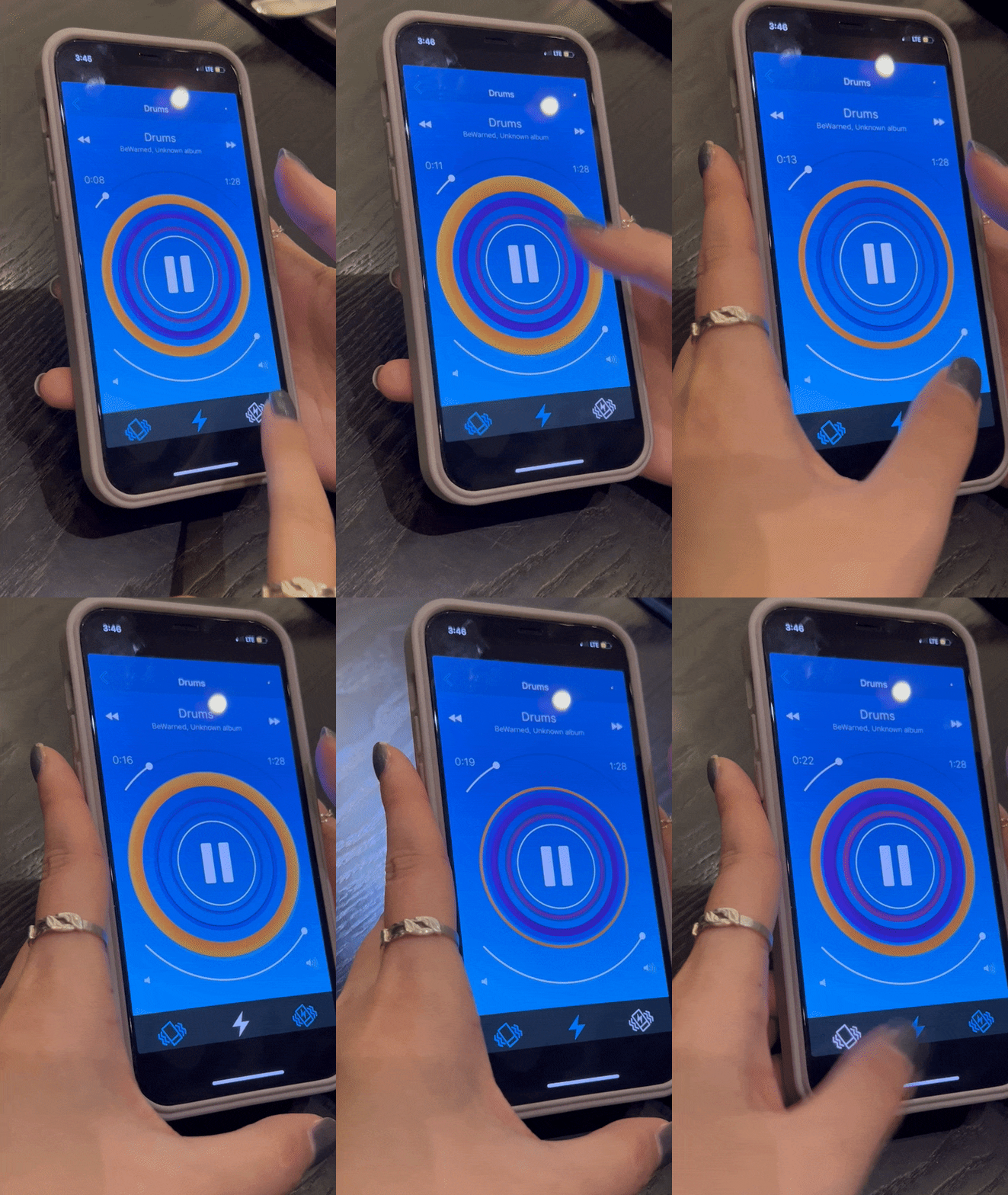
After the secondary research, we tried to know how hard of hearing people enjoy and feel music through haptics such as vibration. As we’ve already mentioned, haptics provides sound information effectively to people with hearing impairment. So we changed equalizer setting to bass booster and played songs with a powerful beat first. Next, we found BW Dance, an app which converts music into visual equalizer, vibration signals and flash and played a song on the app in order to feel the music.
Insight

Contrary to prevalent belief, people with hearing impairment feel and enjoy music through some haptics and visualization.

Define

Hypotheses

  • Hard of hearing people may feel music with powerful beat through their skin.
  • They may also enjoy an advanced visual experience of music.
Solutions

  • Offering some features using haptics and visualizers such as visual equalizers
  • Making Spotify more accessible and providing the best immersive music experience to hard of hearing people
  • Improving the existing features and settings including Spotify Canvas, time-synced lyrics on Spotify

User Persona

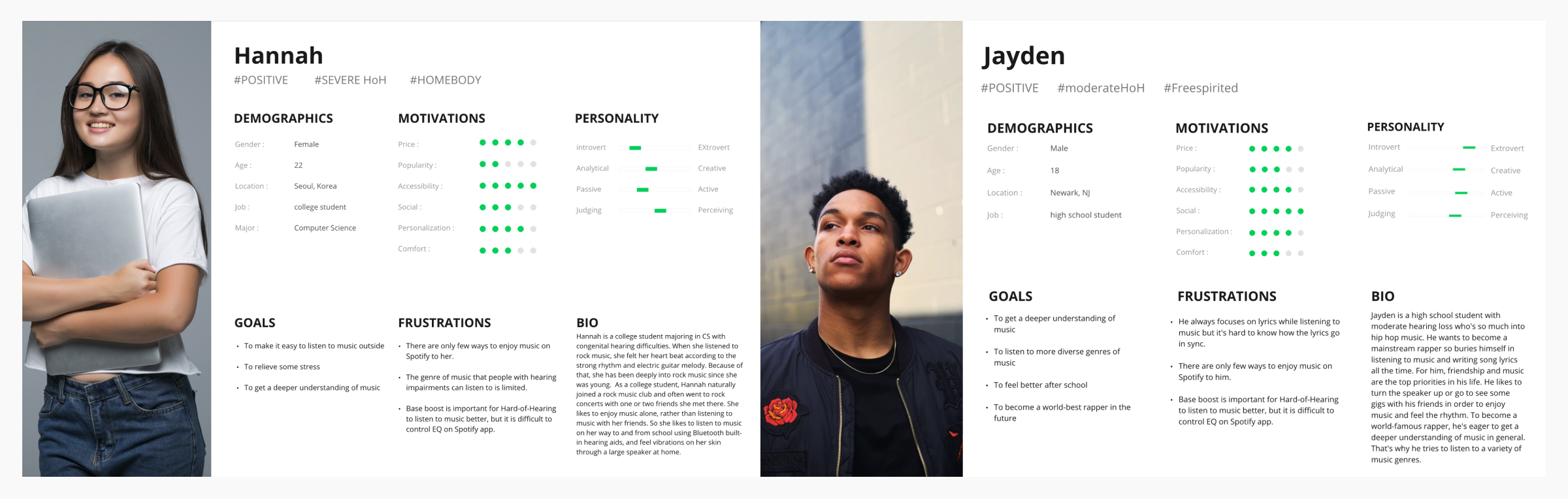
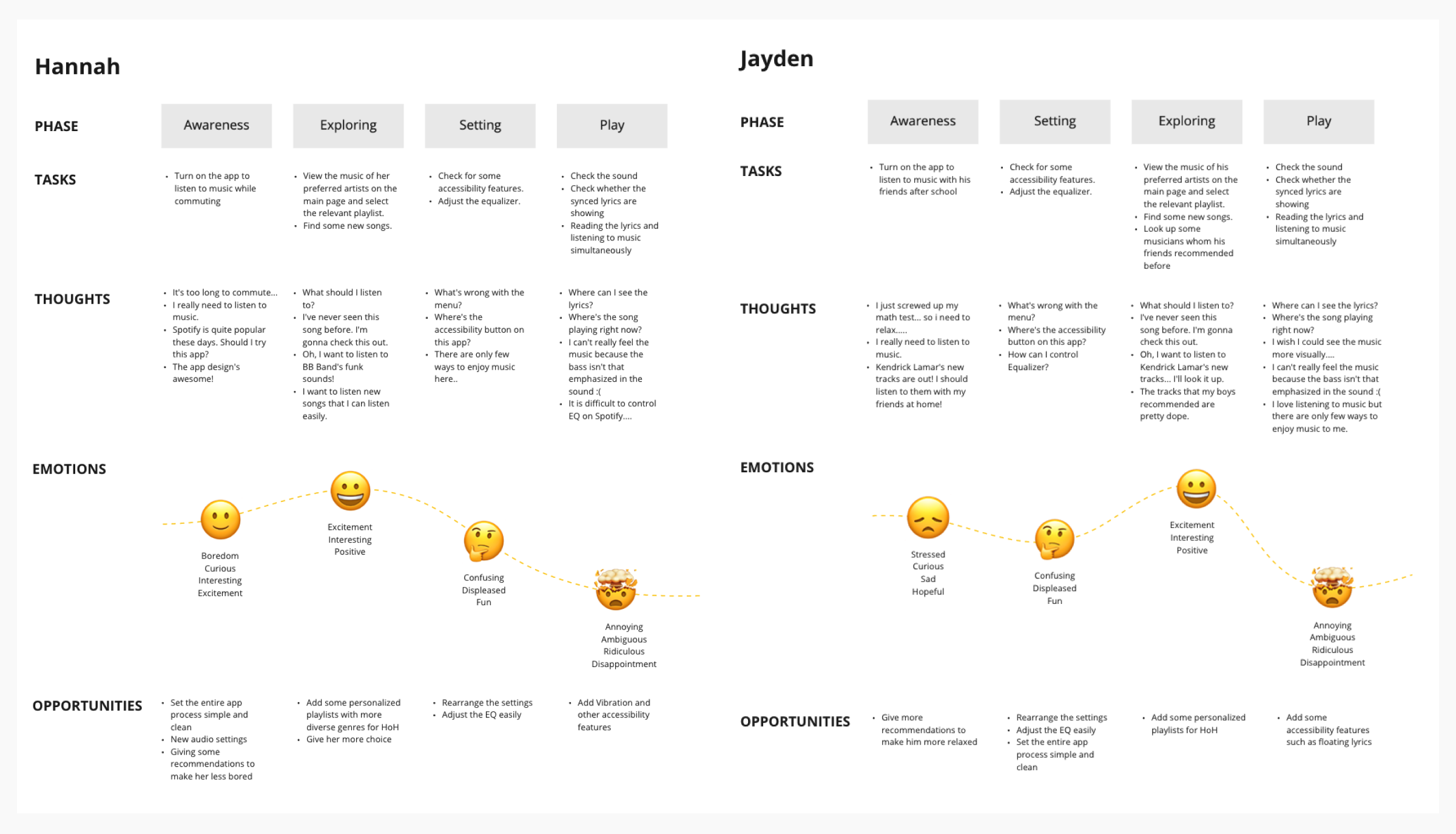
The main targets are teenagers and people in early twenties with hearing loss. We created these personas based on our research.

User Journey

Journey Map are created according to two personas into four stages and analyze their emotions, thoughts and opportunities.

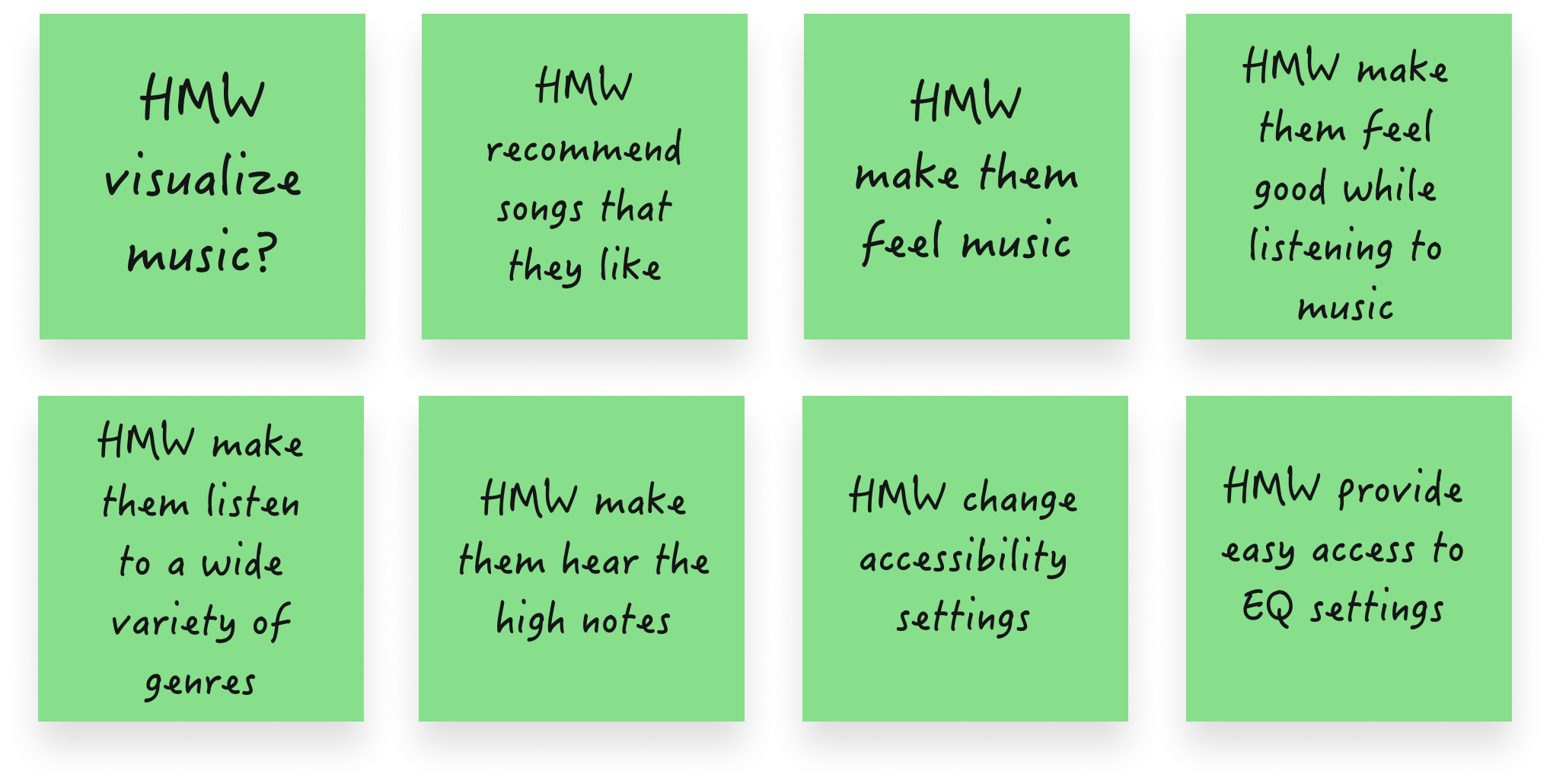
How Might We (HMW) Questions

We started to dig deeper to better understand what user’s problem are by creating How Might We (HMW) Questions.

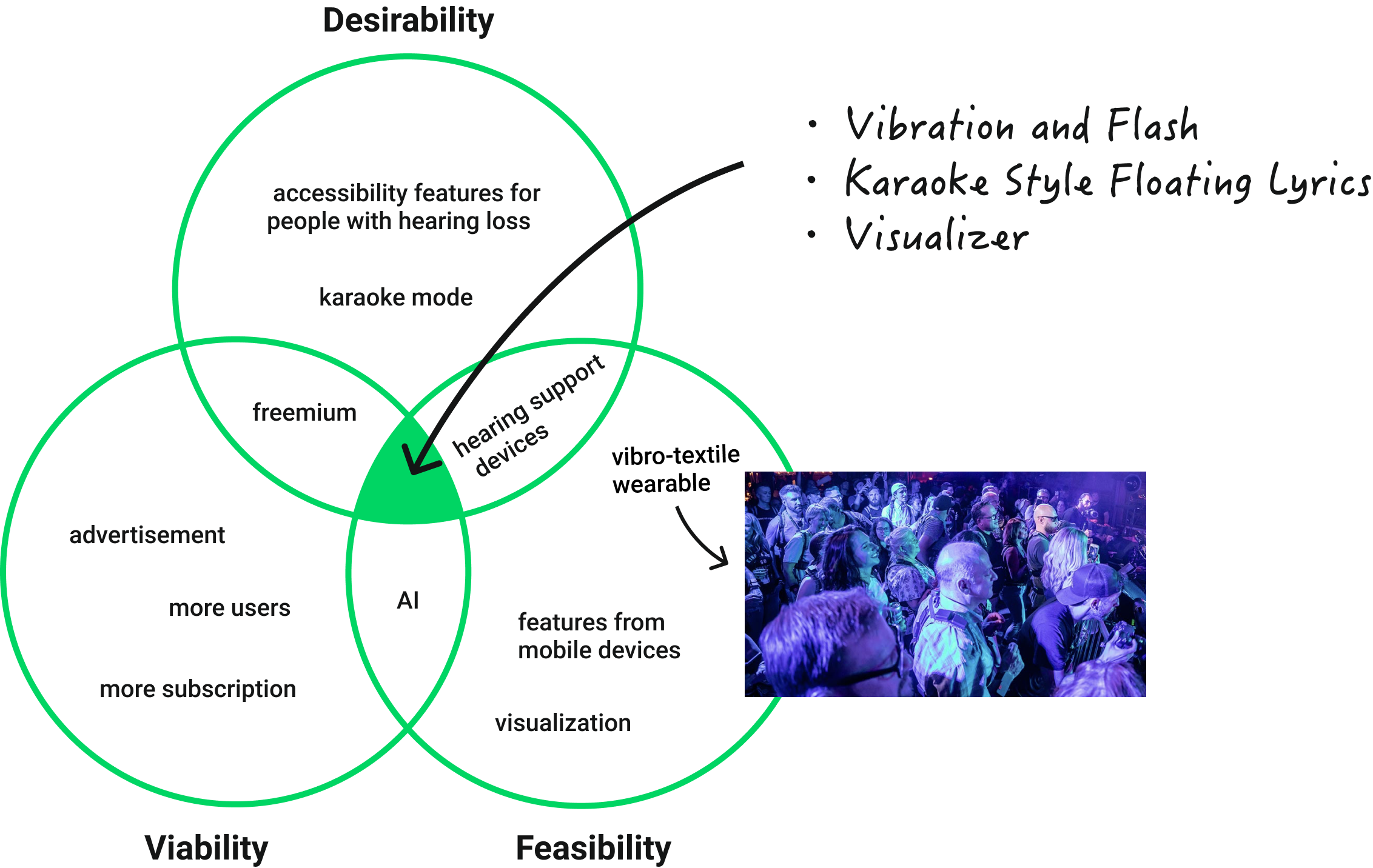
Feasibility Check

In order to define a solution, we had to find out our potential user’s needs, the business model of Spotify and existing technology which could broaden music experience of the Hard-of-Hearing. Through this process, it could be inferred that these three final solutions were perfectly spotted on our three standards, Desirability, Viability and Feasibility.

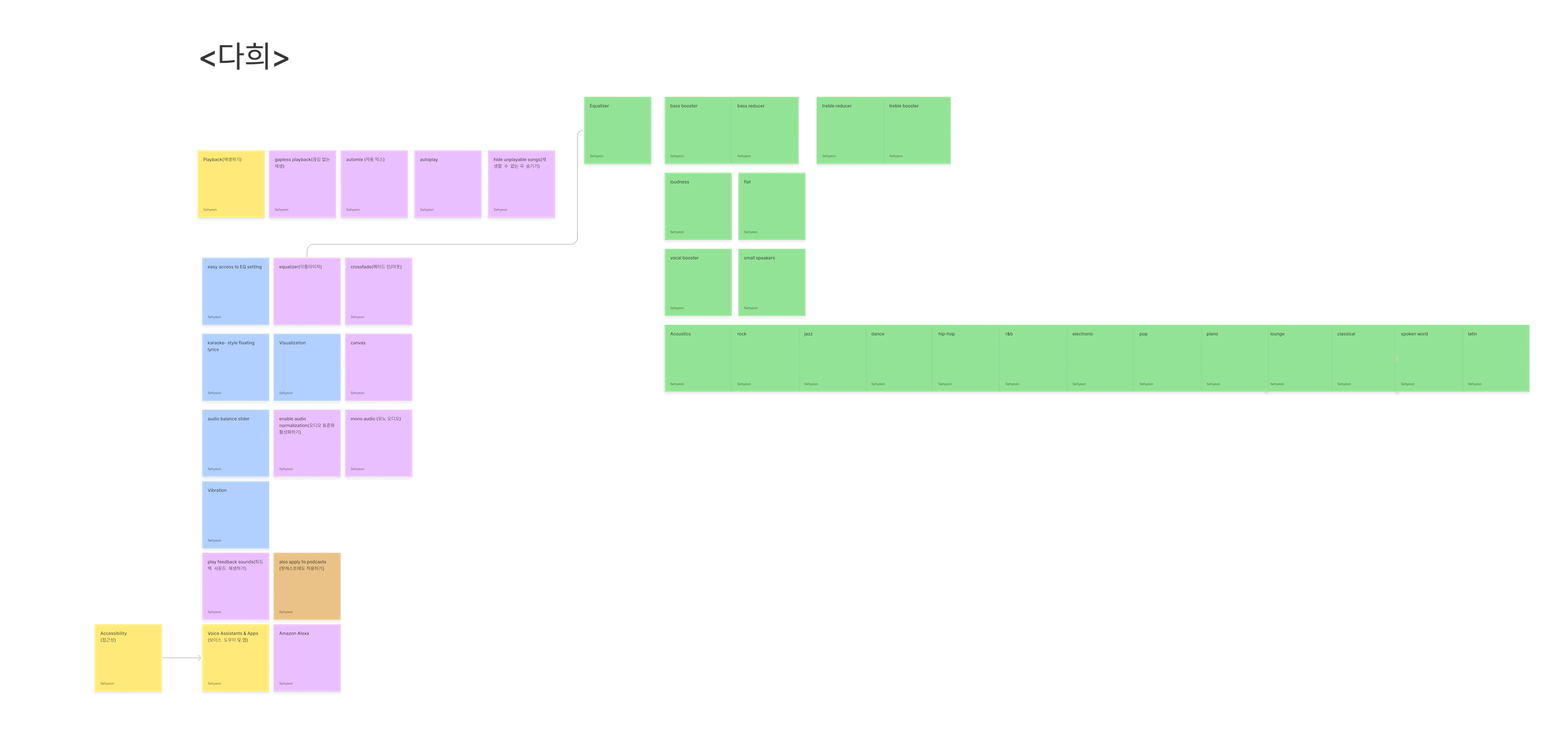
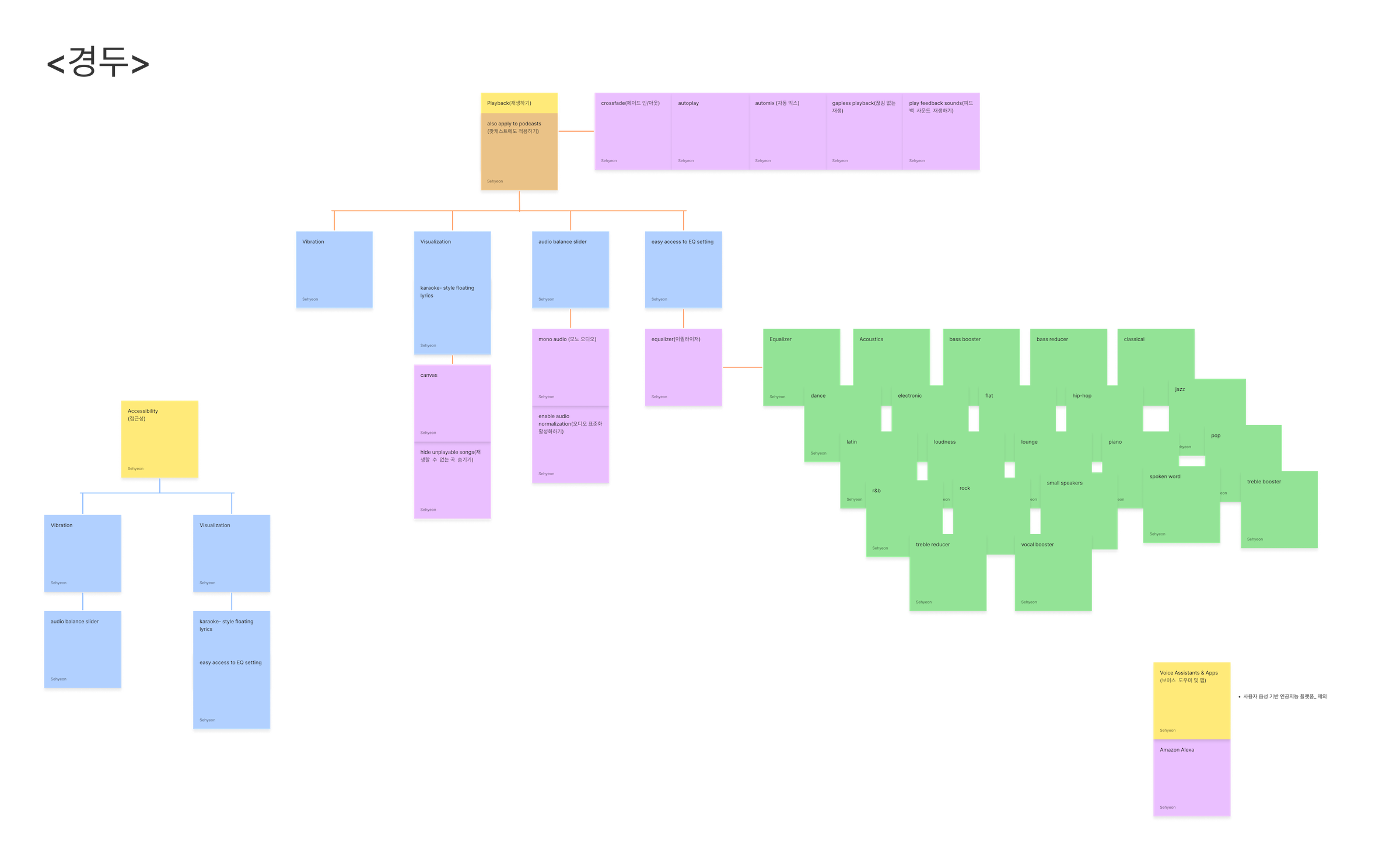
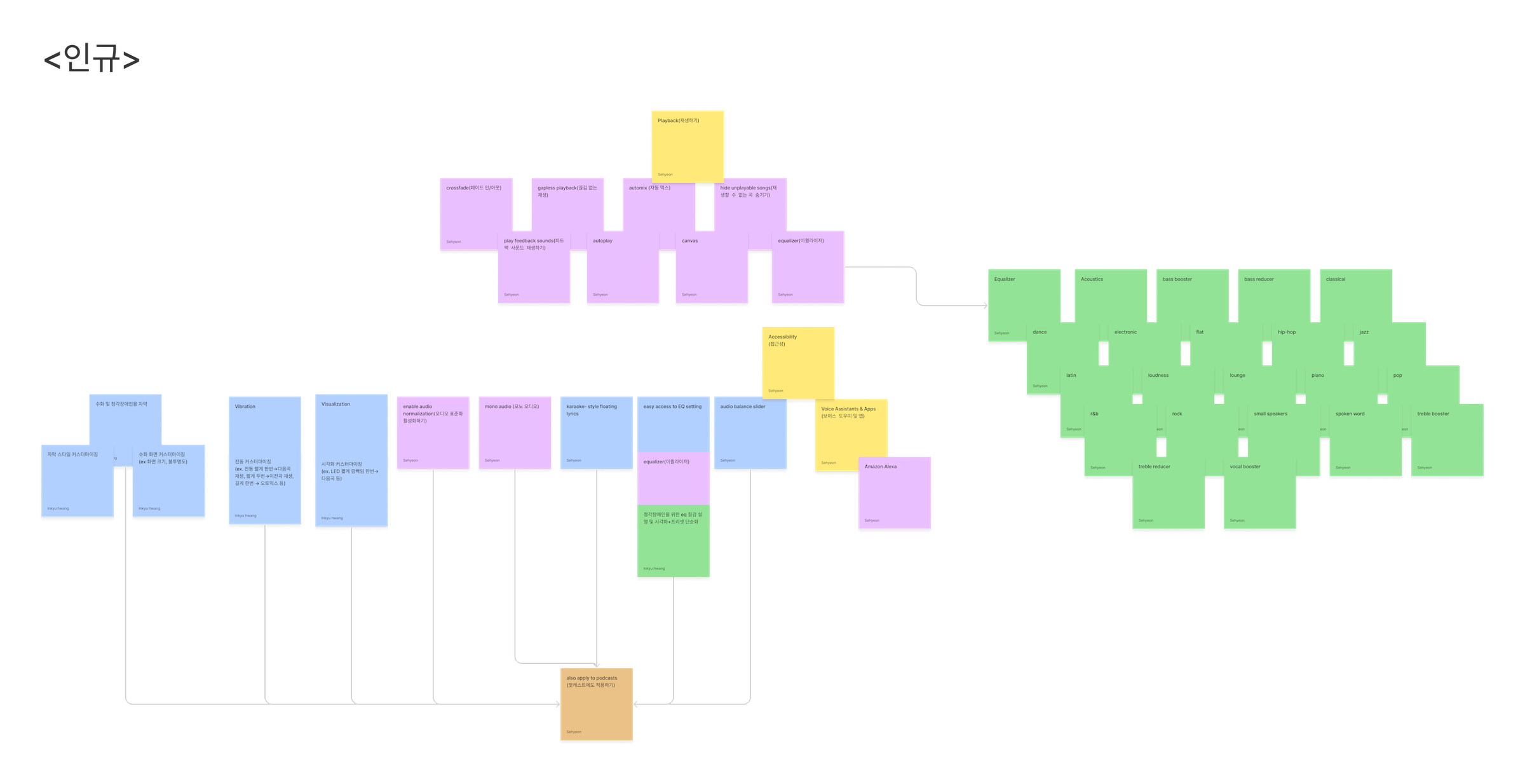
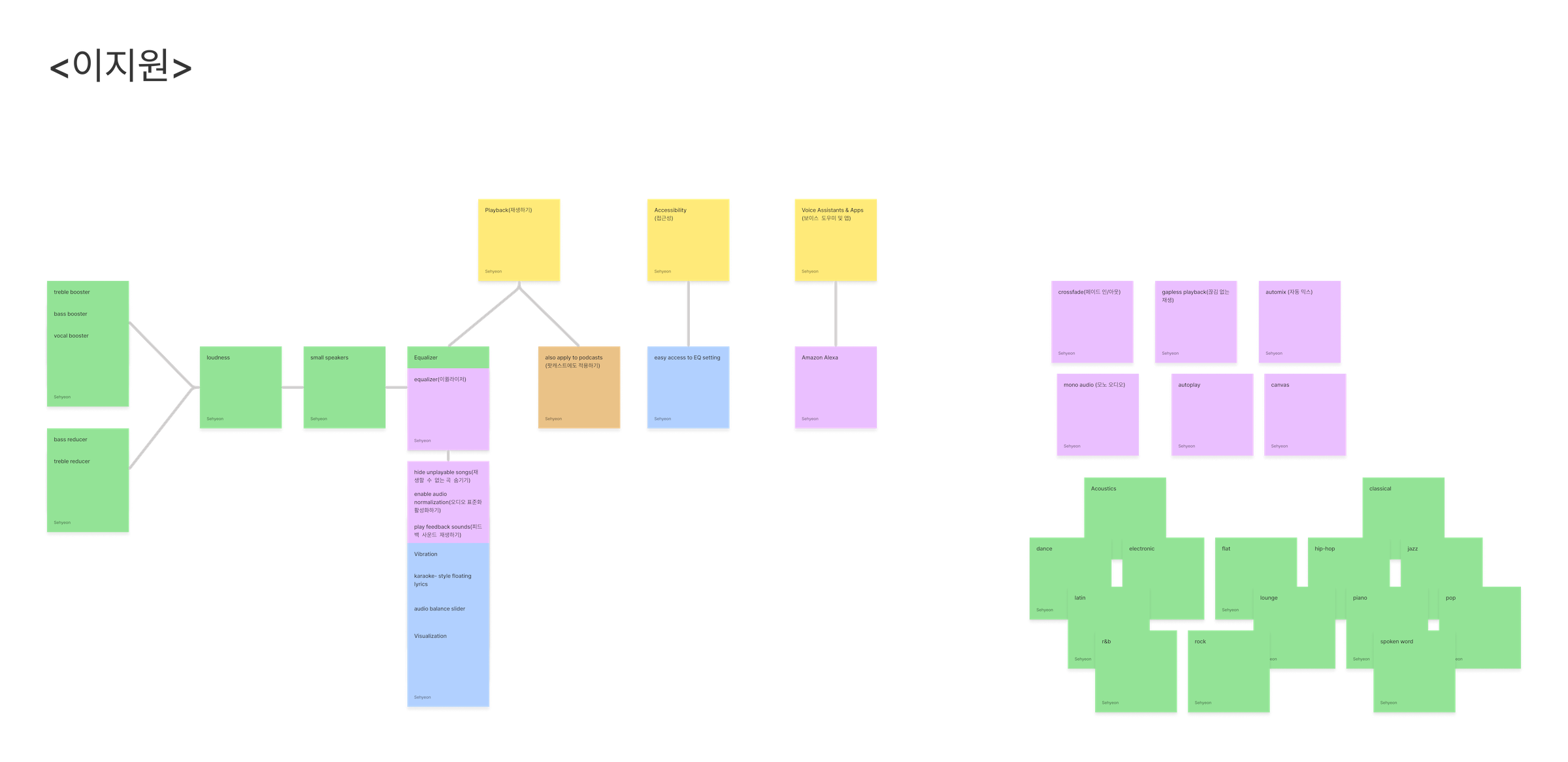
Open Card Sorting

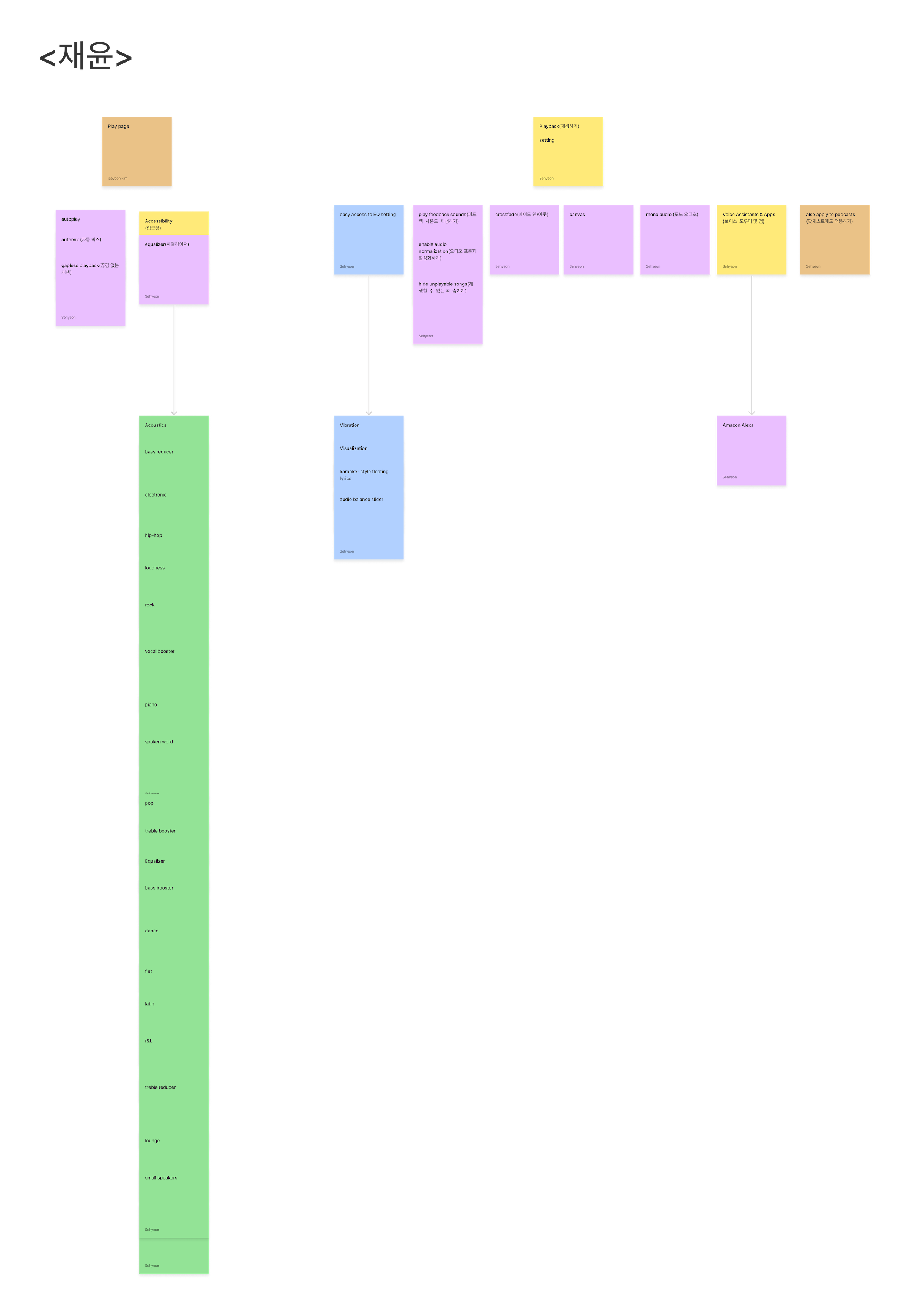
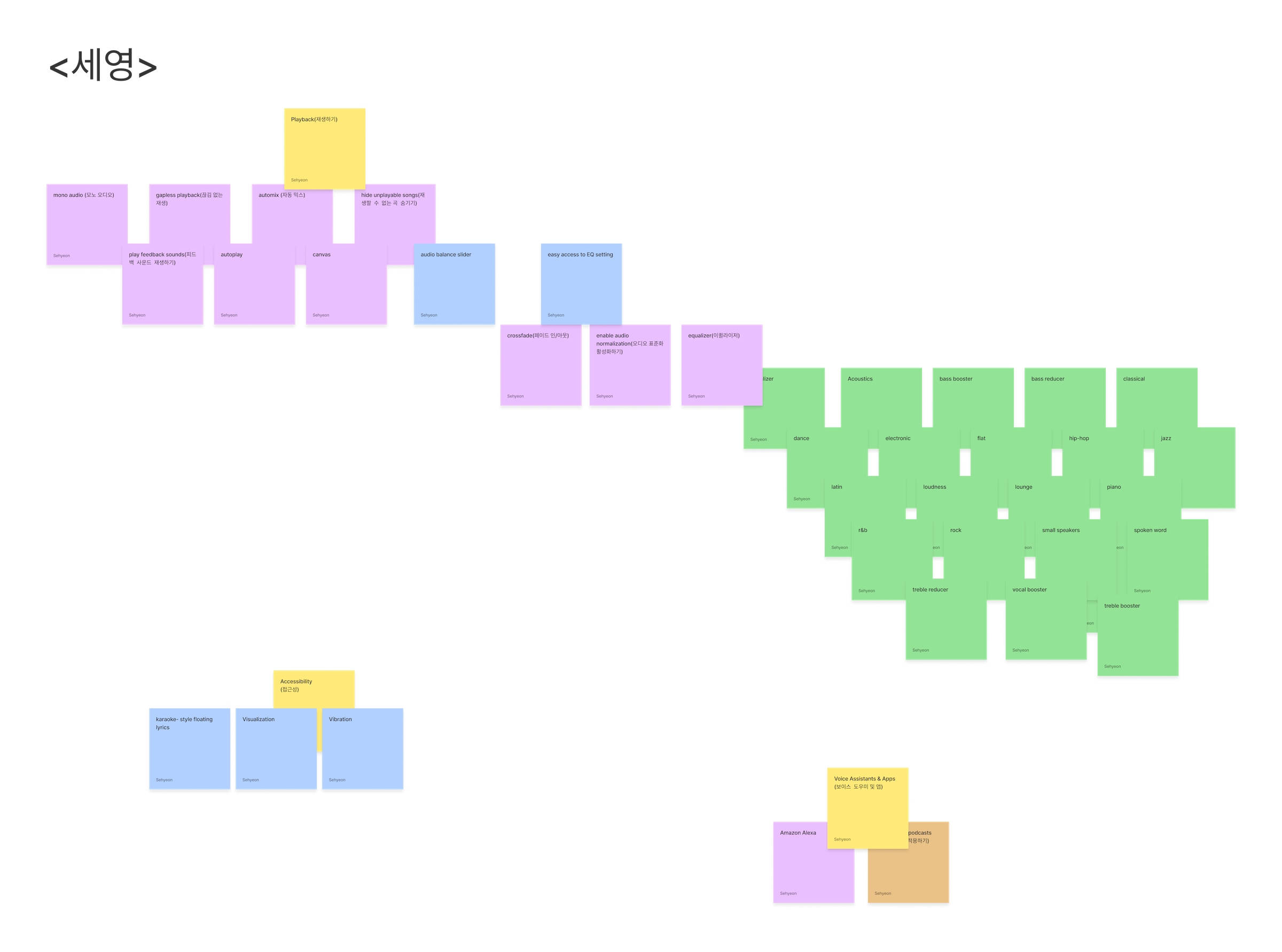
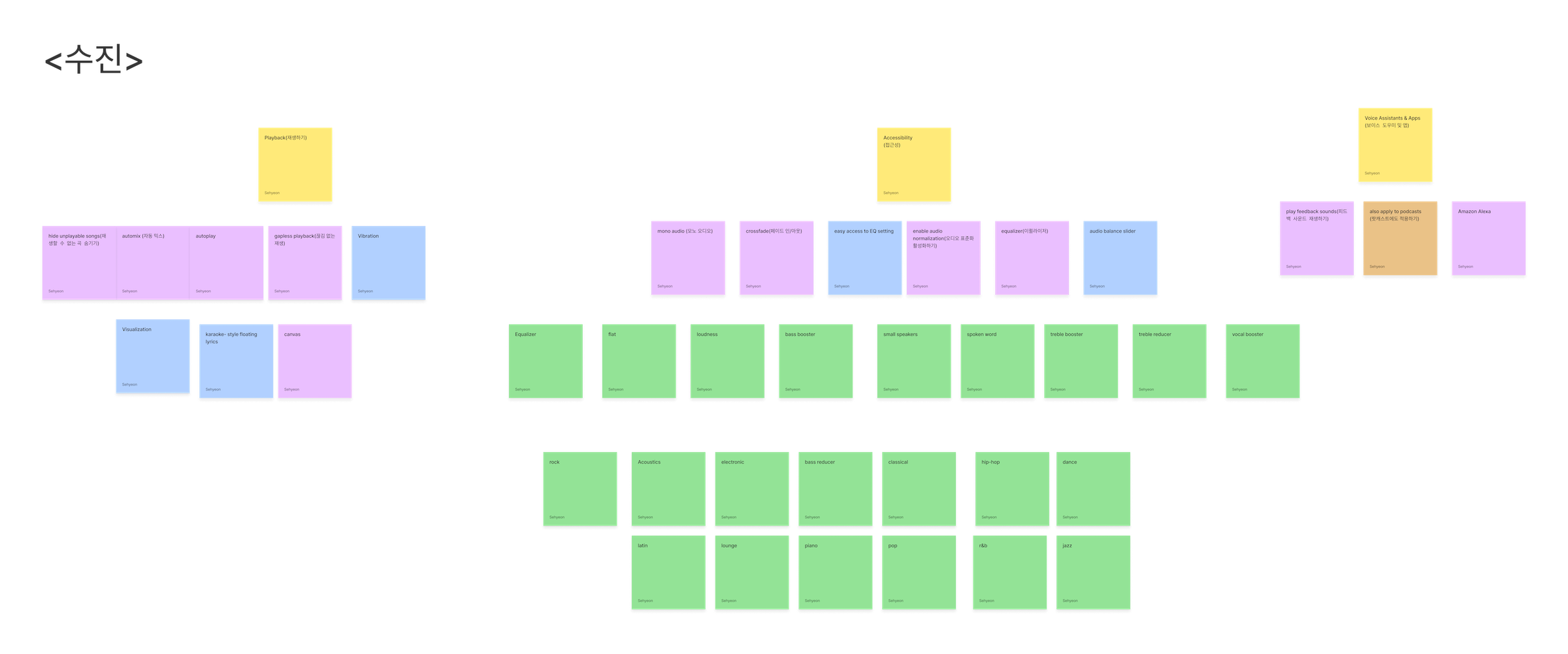
Since Spotify settings menu have been too confusing, we conducted an open card sorting participated 8 people in early to mid twenties to uncover users’ mental models for better information architecture of the settings. We could found common category groups and items that were frequently paired together and apply them to the improvement. 

Information Architecture

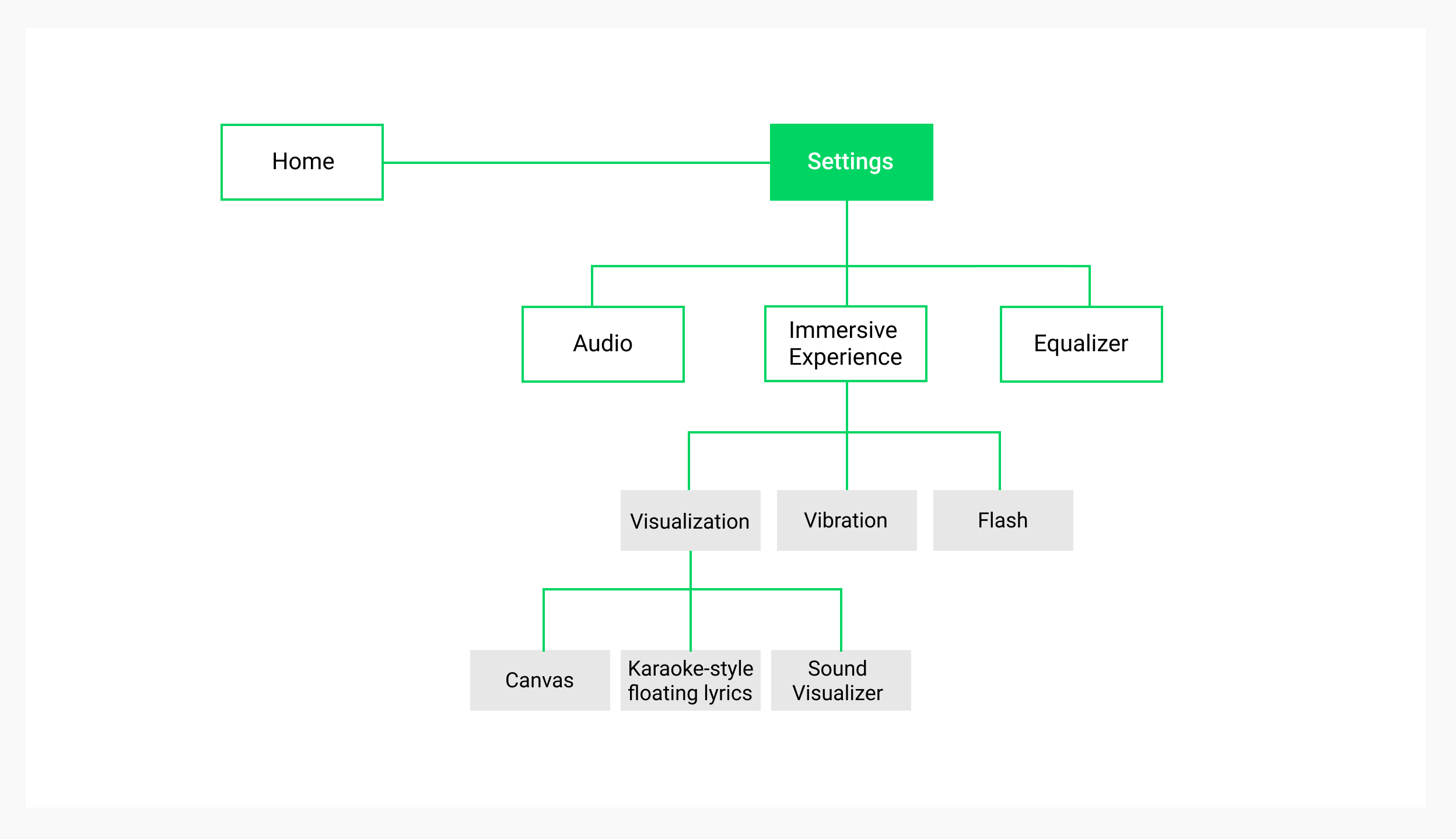
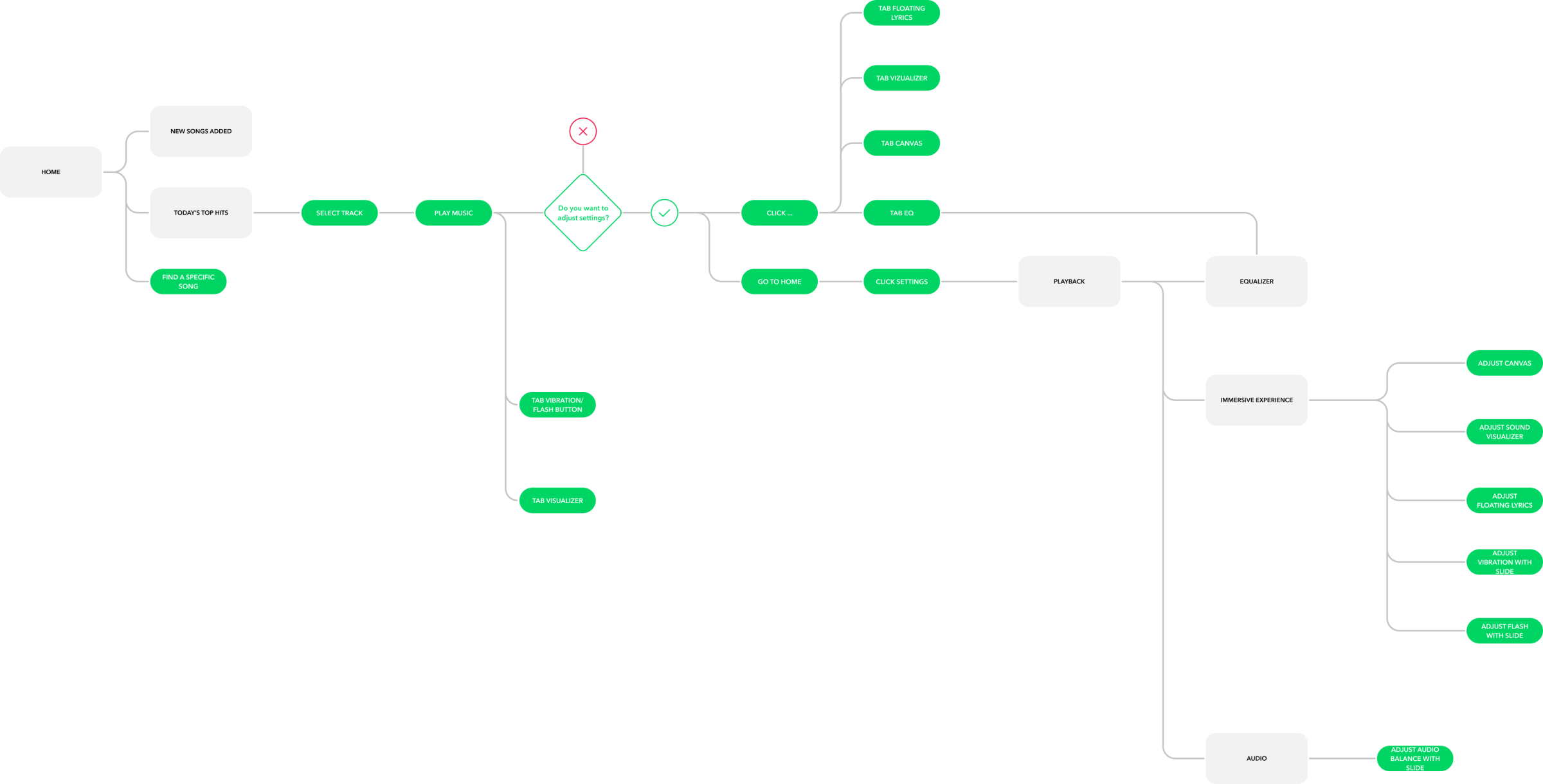
Based on the previous open card sorting, we created a new information architecture of Spotify settings.

User Flow

Develop

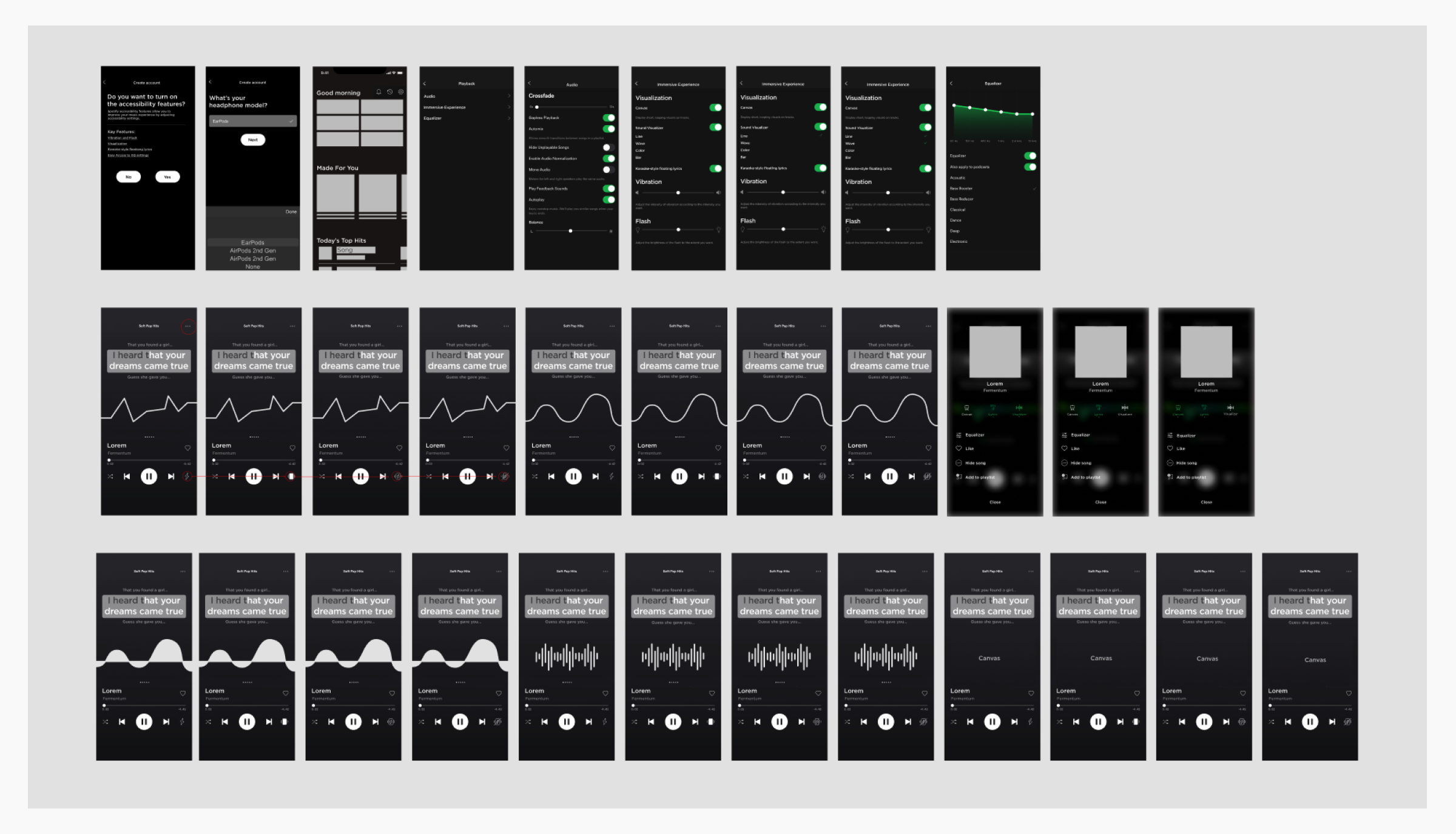
Low Fidelity Wireframes

We started making a wireframe with low-fidelity in Figma based on existing Spotify design.

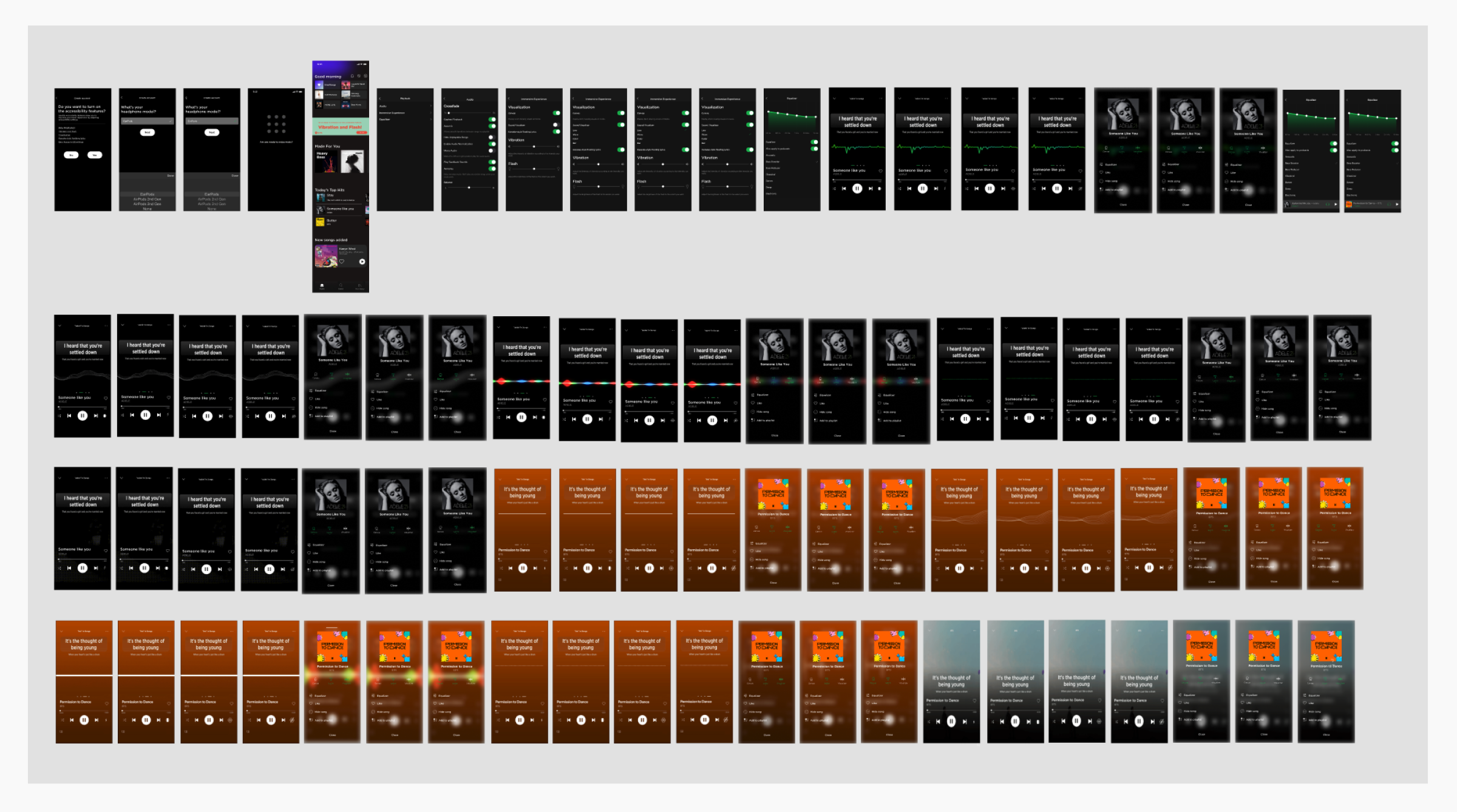
High Fidelity Design

Based on low-fidelity wireframes, we created high-fidelity design of Spotify in Figma and After Effect.

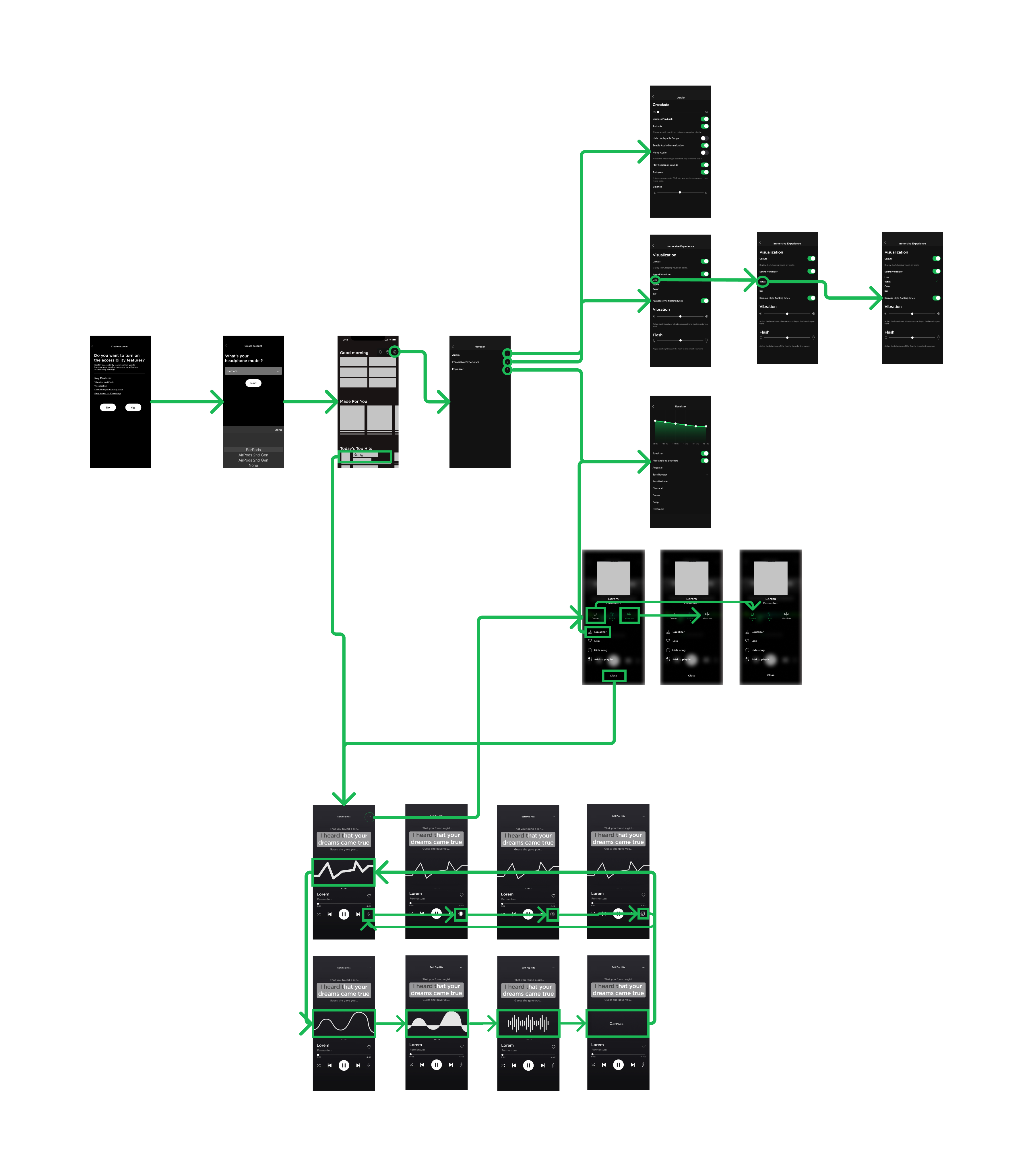
Wireflow / Prototype

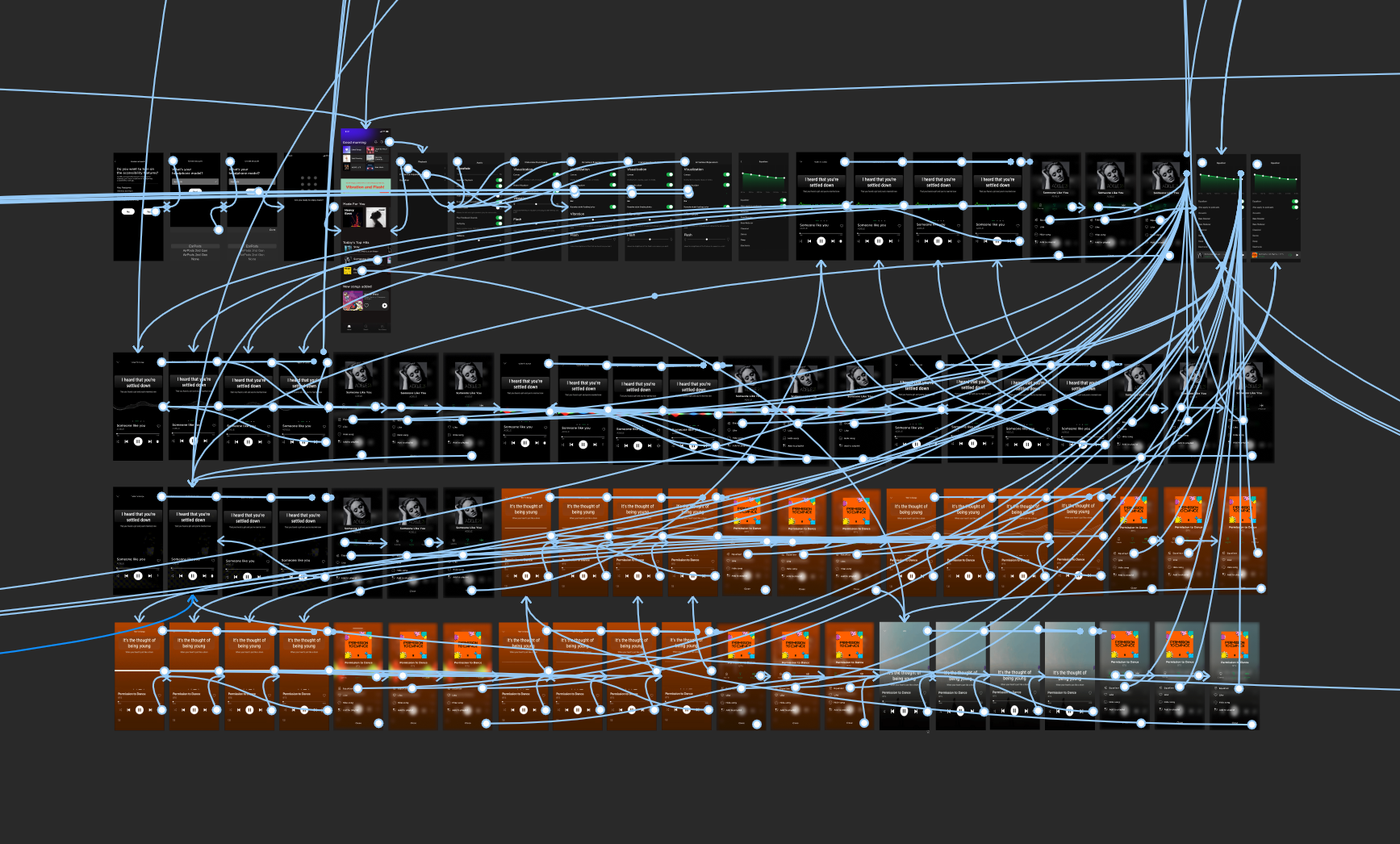
We connected the whole designed pages and added some interactions to prototype in Figma and After Effect perfectly.

Final Output

Onboarding

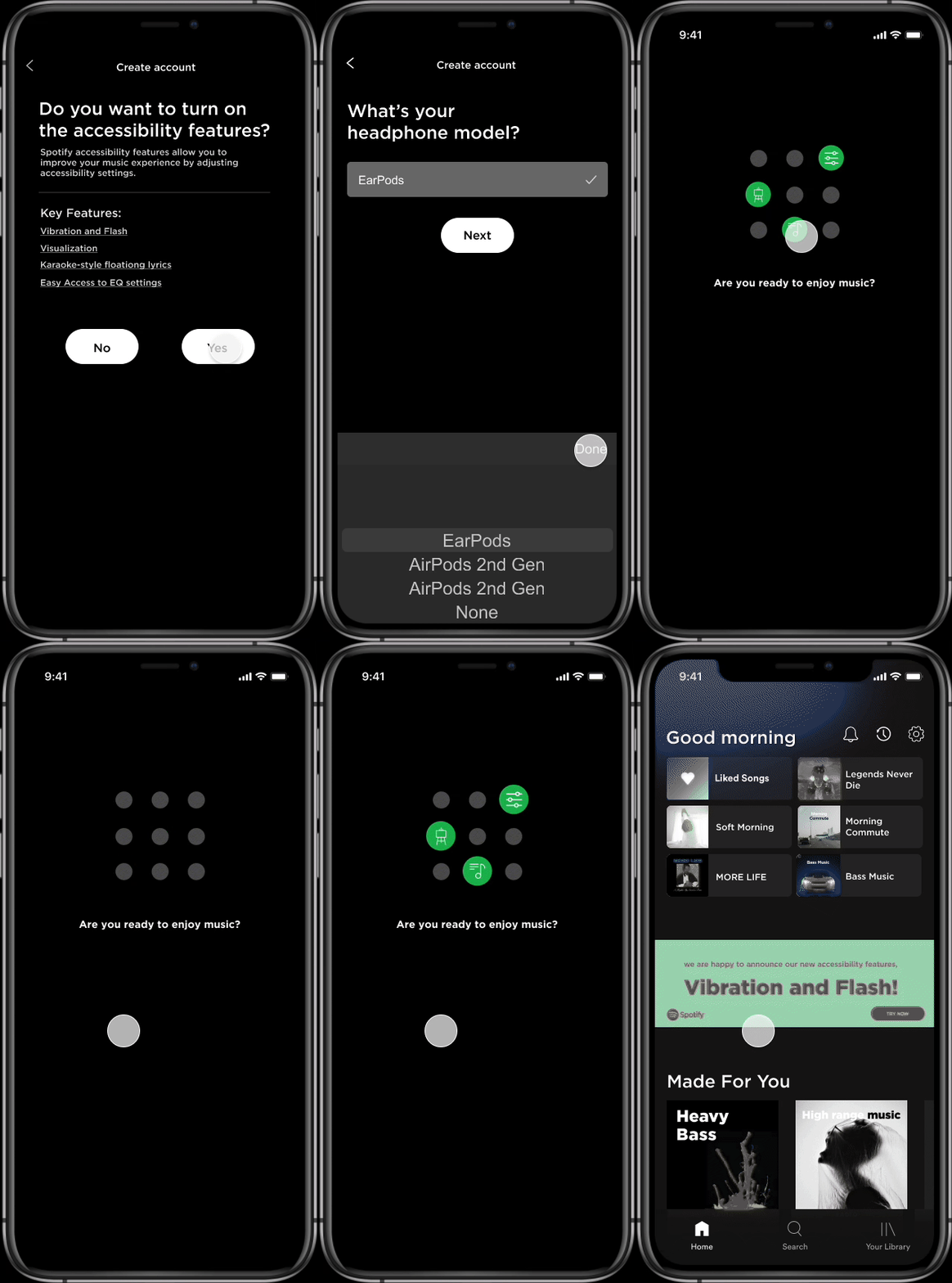
We improved the onboarding process for users who need accessibility features. If tapping Yes, all accessibility features like Vibration and Flash will be turned on automatically. Moreover, the whole audio settings such as Equalizer will be set up automatically if they choose their own audio devices on the screen.

Easy Access to Settings

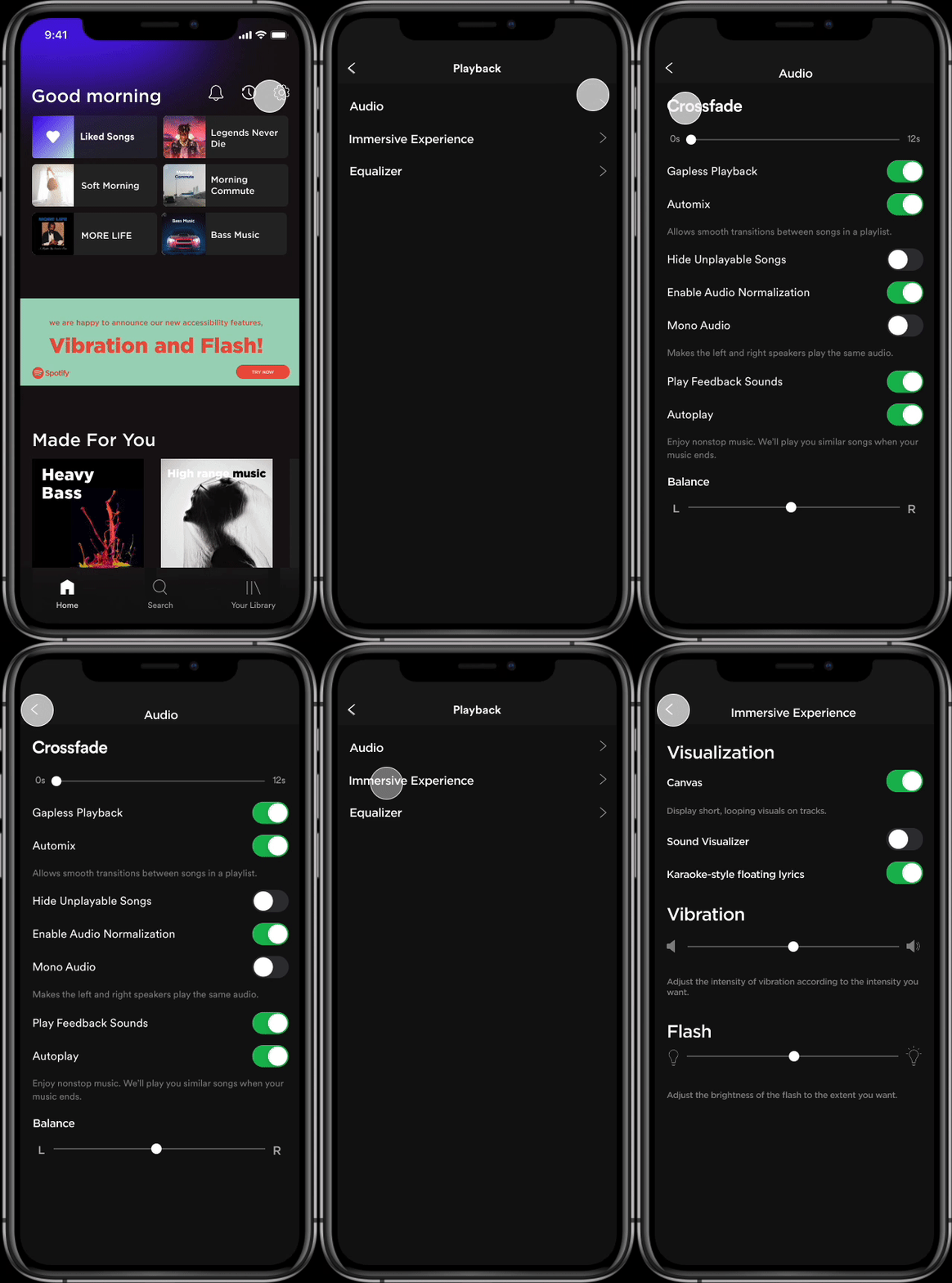
We redesigned playback settings of Spotify in order to make users access settings more easily. We devided the existed whole settings and new accessibility features we created into three categories, Audio, Immersive and Equalizer.

Visualization

We offered new player design with sound visualizers. This feature would help users feel and enjoy music visually. There are four visualizers in this feature – Line, Wave, Color and Bar.

Vibration and Flash

People with hearing loss do enjoy music through powerful low-frequency sounds vibrations and lights. For that reason, we offered them vibration and flash features on Spotify player to enjoy music.
Karaoke-style
Floating Lyrics
Synced lyrics are already available on Spotify but it is not a ‘real time’ synced. We redesigned this synced lyrics to karaoke-style floating lyrics for people with hearing loss to provide more music experiences.

Reflection

What I Learned

As a hearing person, the project was a big challenge to me. However, I struggled to think what users really want and need through various research and immersion process first and realized the importance of inclusive design in UX. I also learned how to use hypothesis-driven design in order to get a clearer path of what’s most important to the users.

Next Step

Since user interview and test weren't conducted, we would like to observe people with hearing impairment listening music and carry out usability testing in order to prove our hypothesis as soon as possible. We also try to keep an eye on emerging technology which could help our users have richer music experience.

More Projects

Kiddiez

Service Design

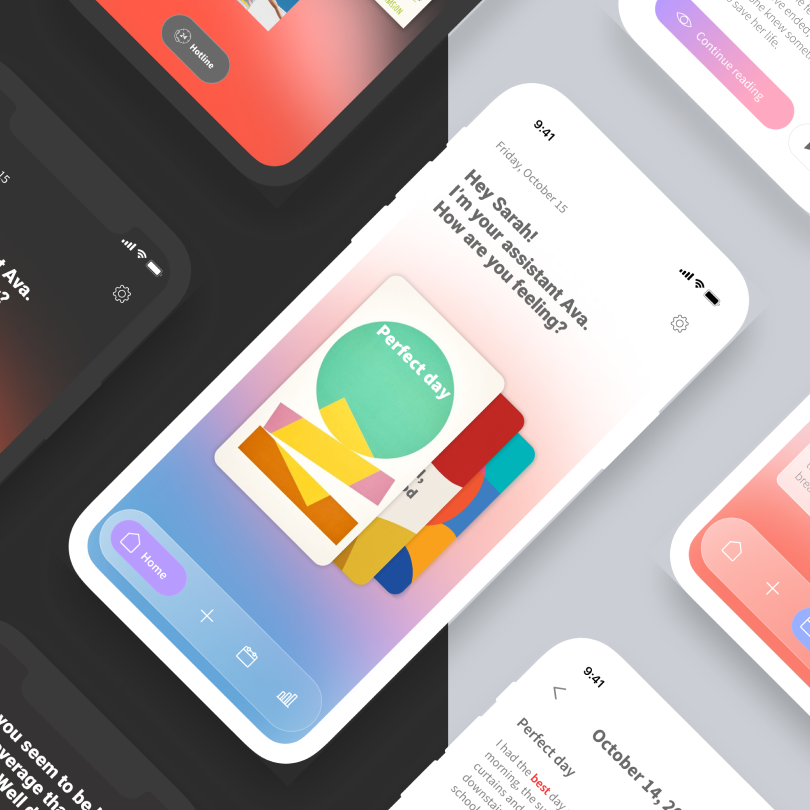
Mooday

Service Design

The Underdog Uprising

Data Analytics

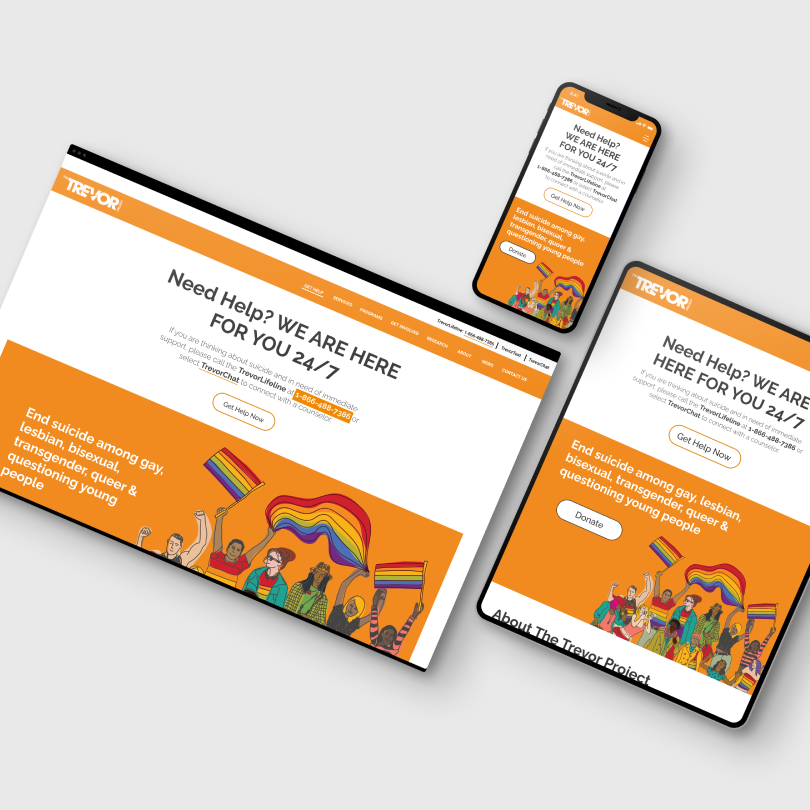
The Trevor Project

Web Responsive Design