sehyeonjin.com

Mooday

Service Design

Project Overview

Improving Your Mood through Journaling Everyday

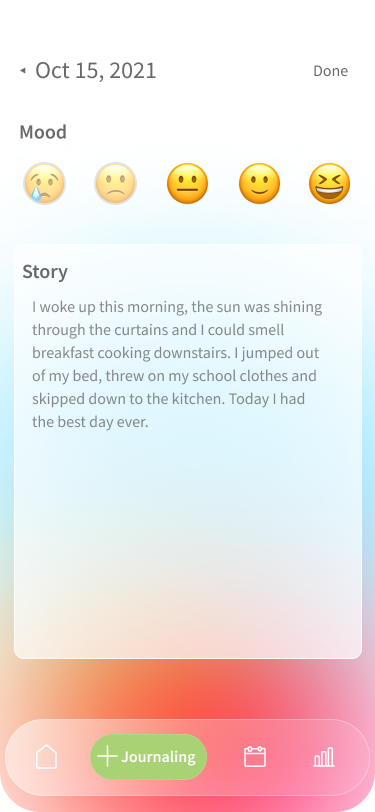
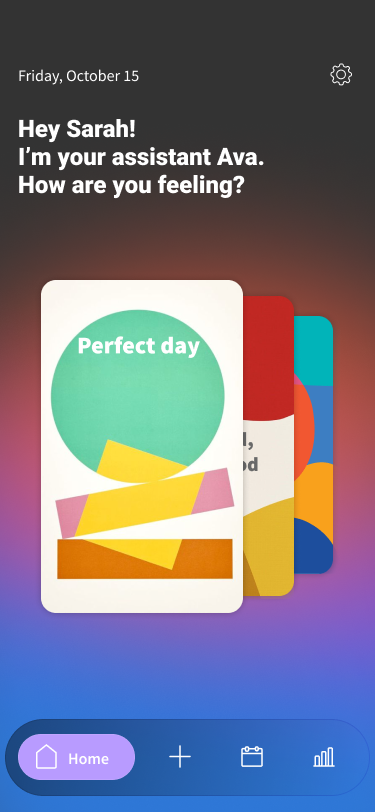
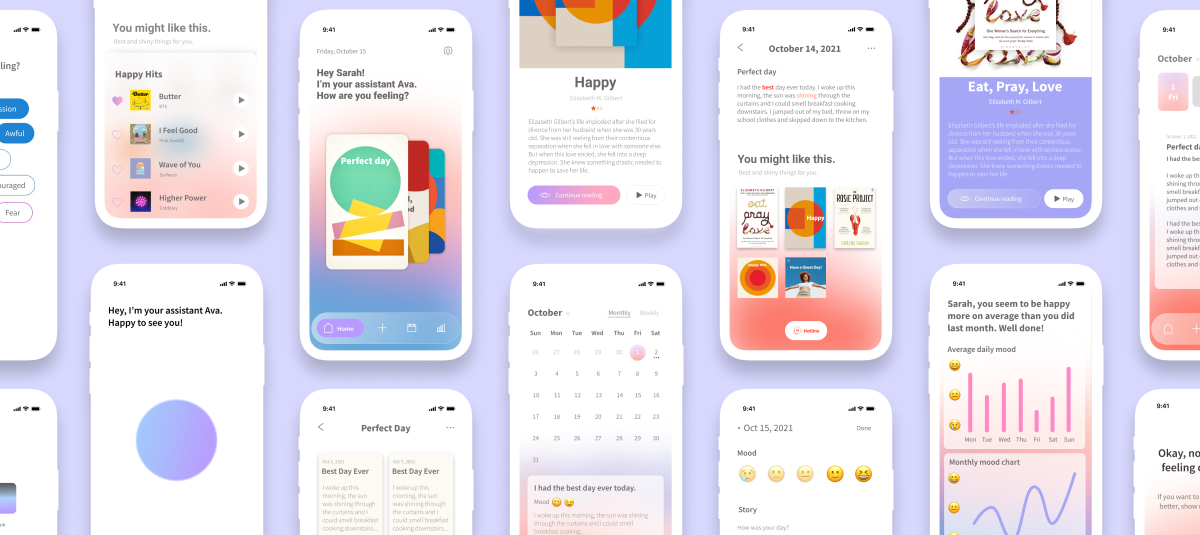
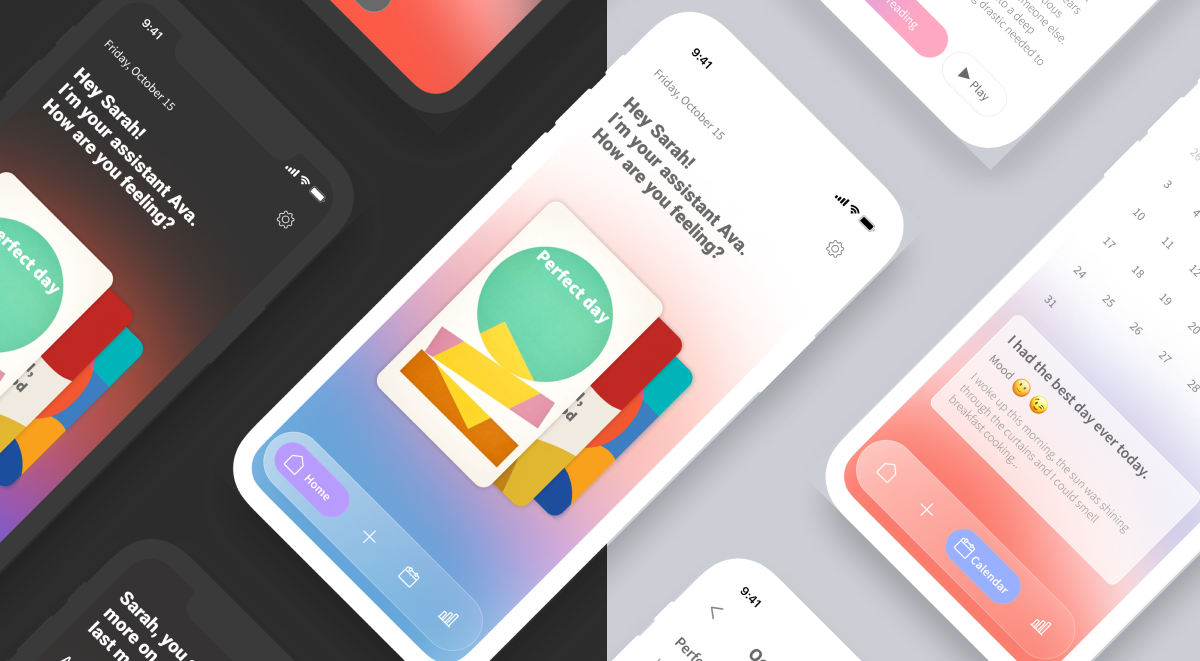
Mooday is a journal app for young adults who like to record their own life and track their daily emotions. Our virtual assistant Ava may help you to find your daily moods automatically and recommend the best books and playlist based on your daily journal.

Project

Team Project

My Role

UX/UI Designer,
UX Researcher

Duration

7 weeks

Tools

Figma, Miro, After Effect

Objective

How might we support users to track their own mood and channeling bad mood into good ones.

Solution

Mooday – a daily journal app analyzing their moods accurately and providing books and playlist recommendation based on the journals.

Key Features

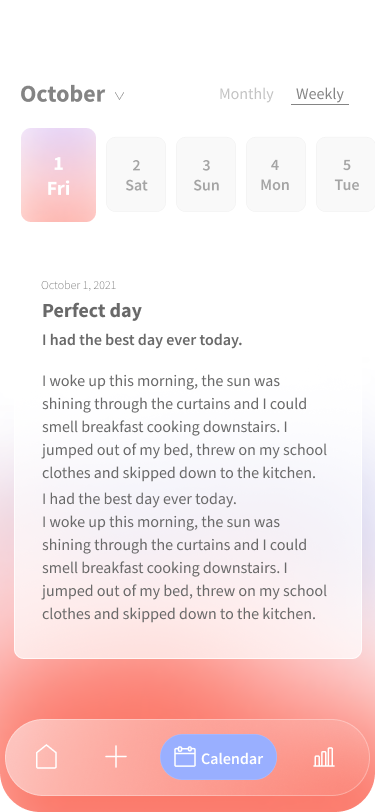
Making your daily journals to various mood books

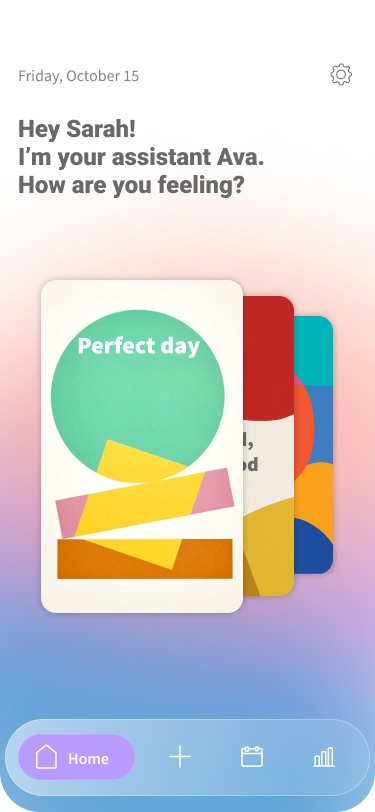
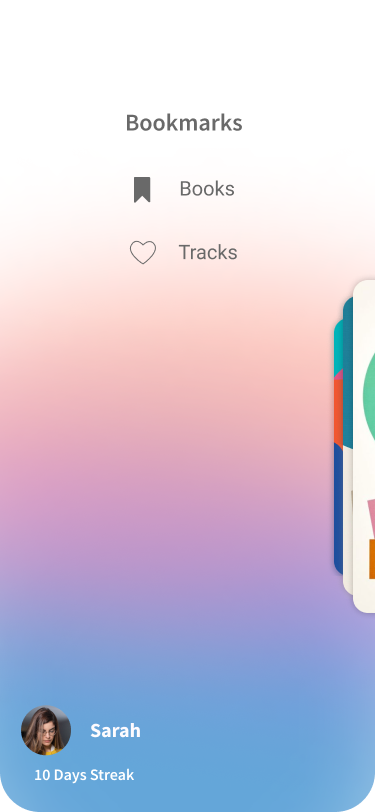
All journals are classified by your moods and turn into various type of mood books such as Perfect Day and Blue. If you open the books, each journals will be shown immediately.

'Ava knows me better than I know myself.'

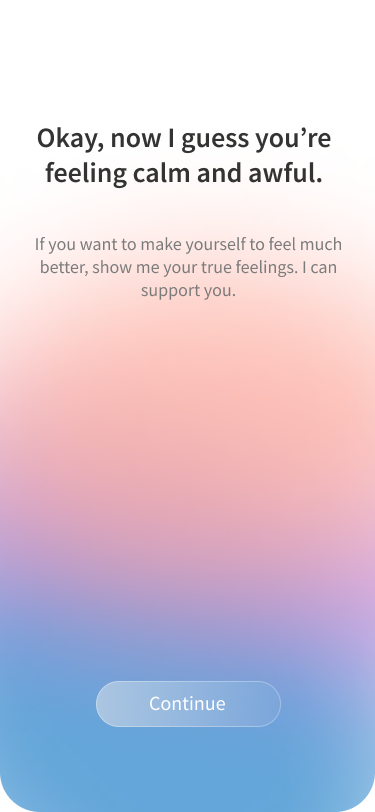
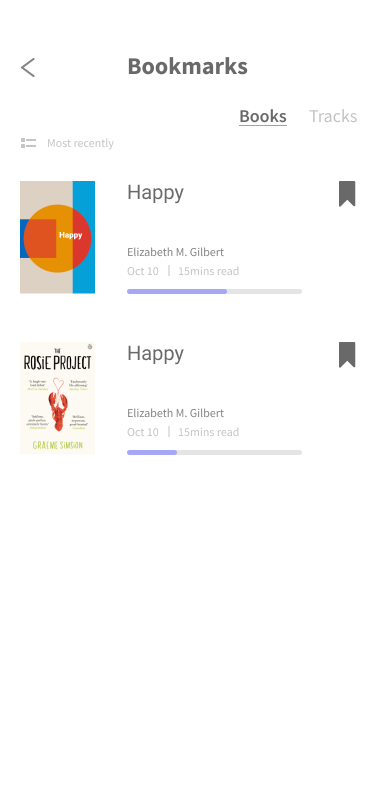
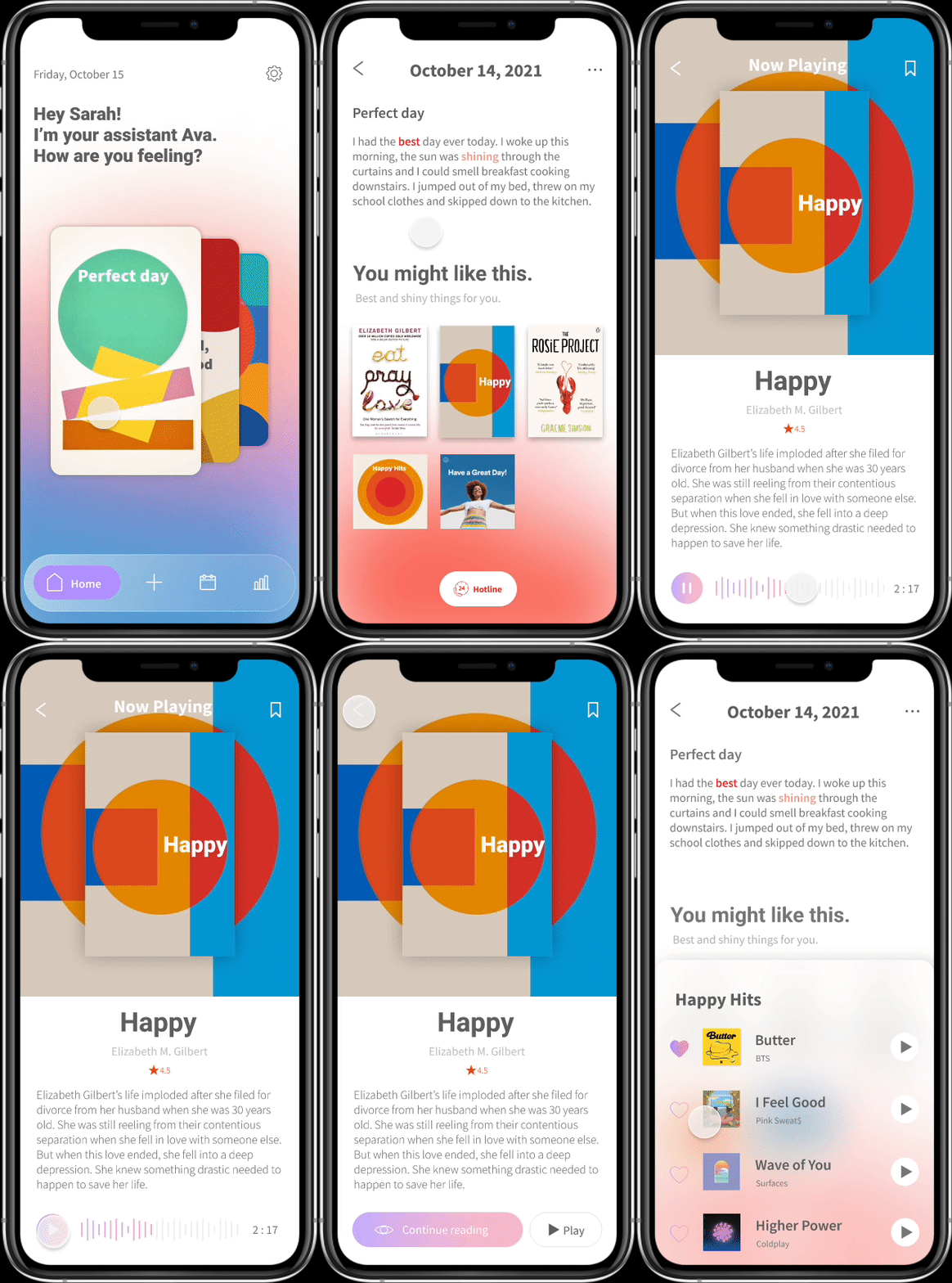
After writing a journal, book and playlist recommendations are given based on your mood of the journal. If you feel blue, your assistant Ava will provide you an immediate relief, playlists and books, and make you happy.

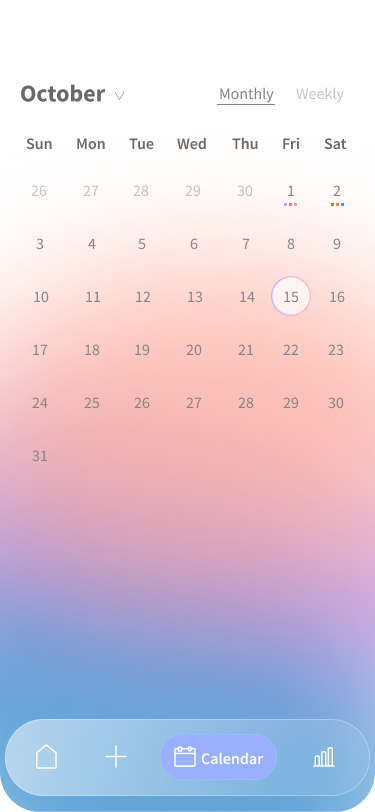
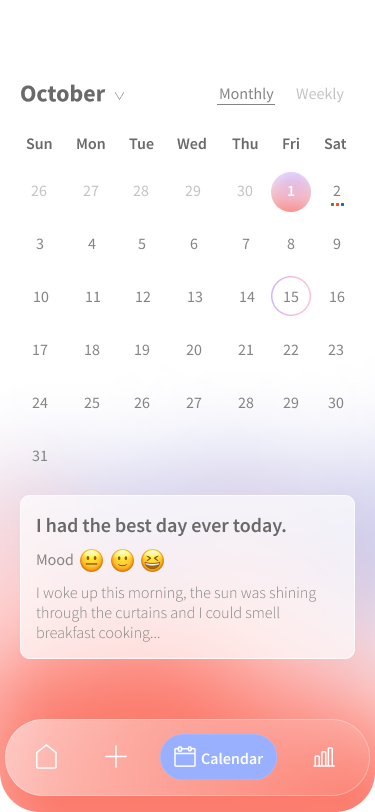
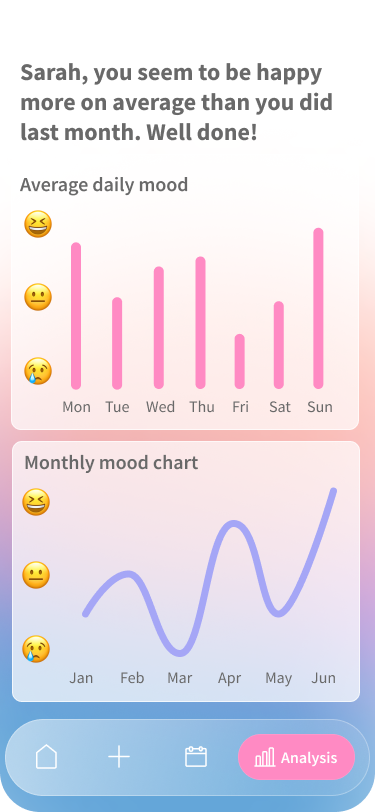
Tracking your daily mood every day, week and month​

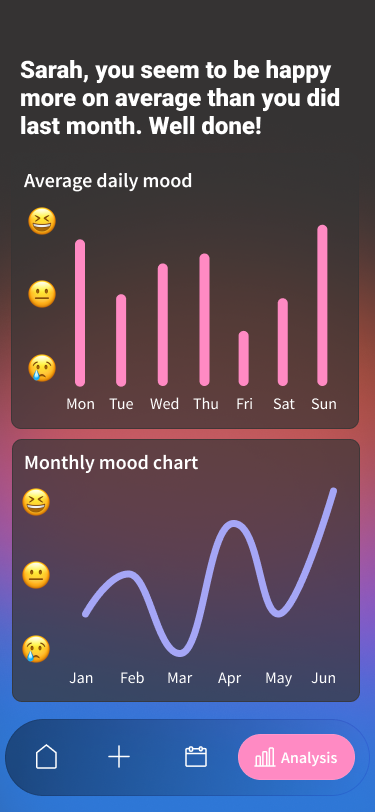
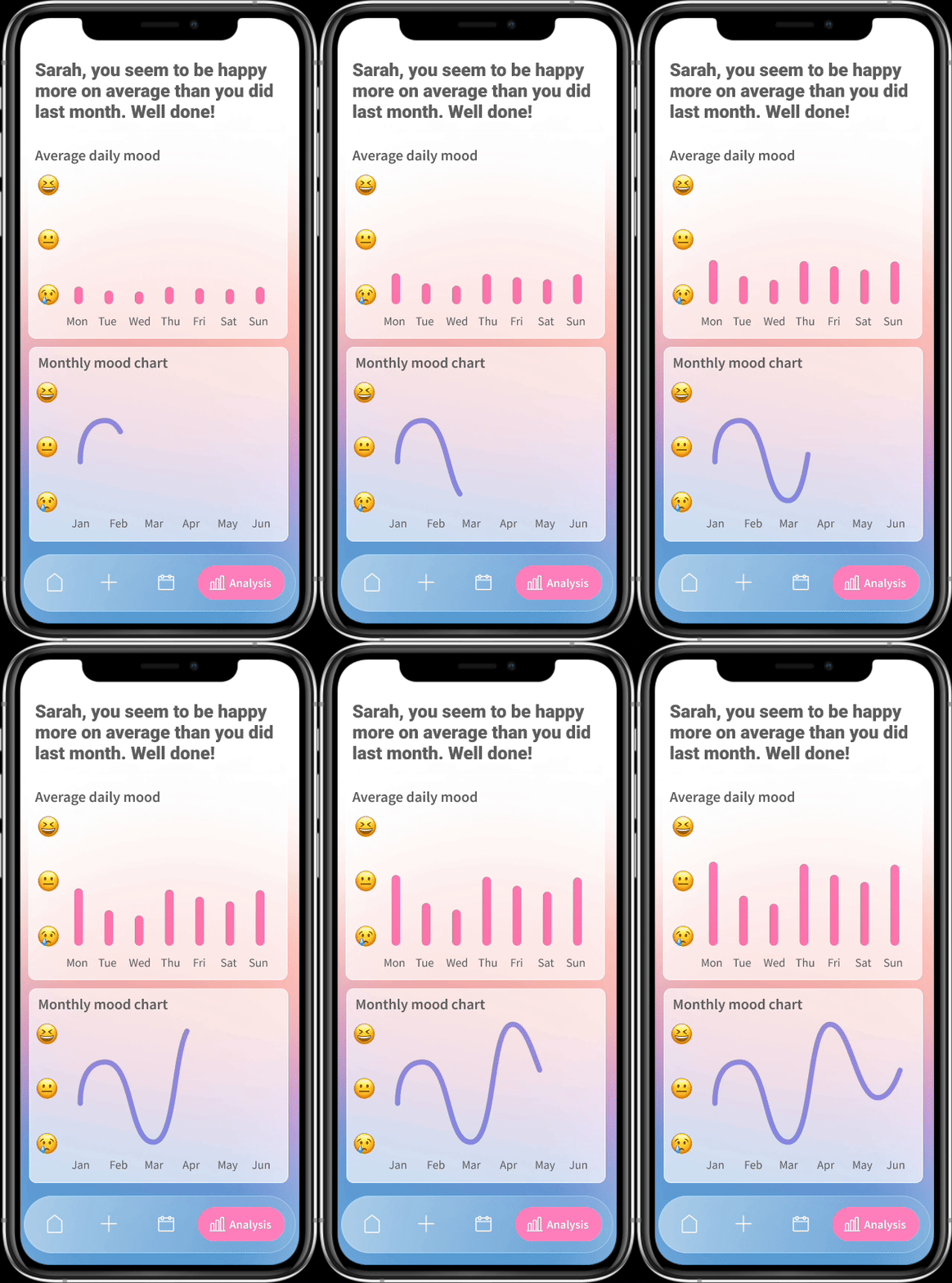
Understanding your moods helps you manage them feel better faster, so you can manage your moods by following your history on this app. Ava also give you a summary of your current mood and always roots for you.

Project Process

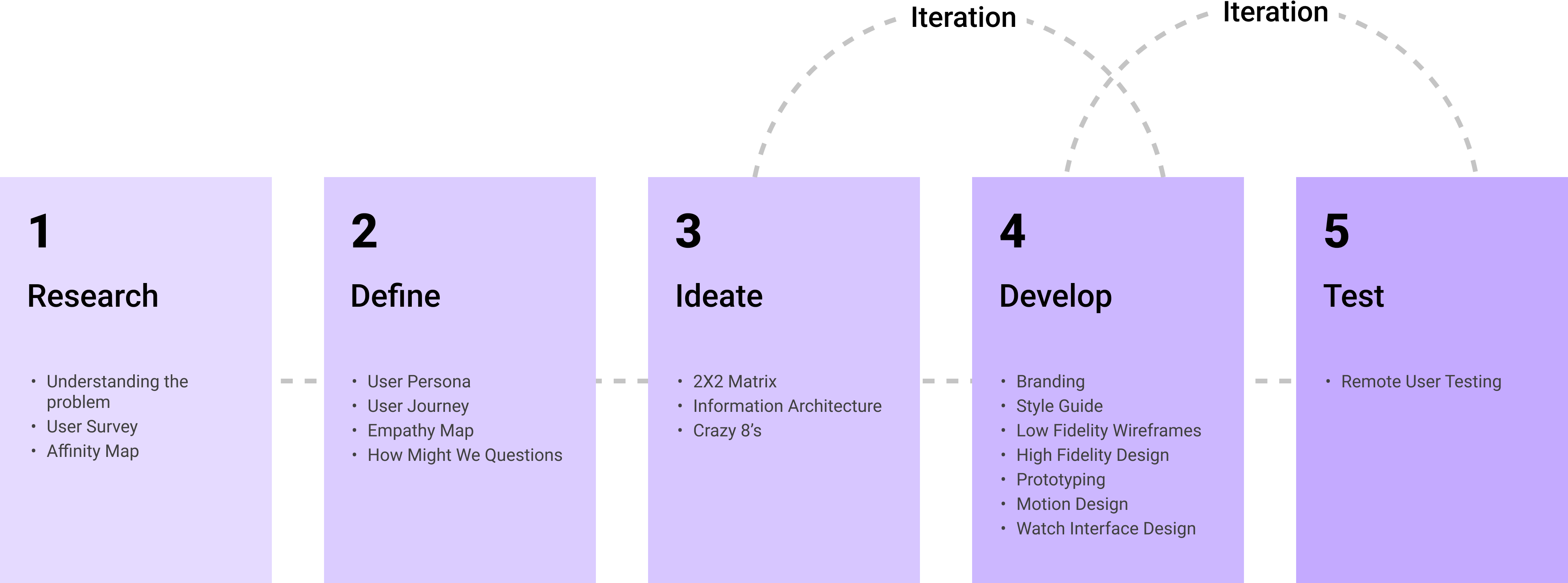
Research

Understanding the Problem

Mental health is important at every stage of life, from childhood and adolescence through adulthood. These days, however, mental health problems are on the rise among young adults.

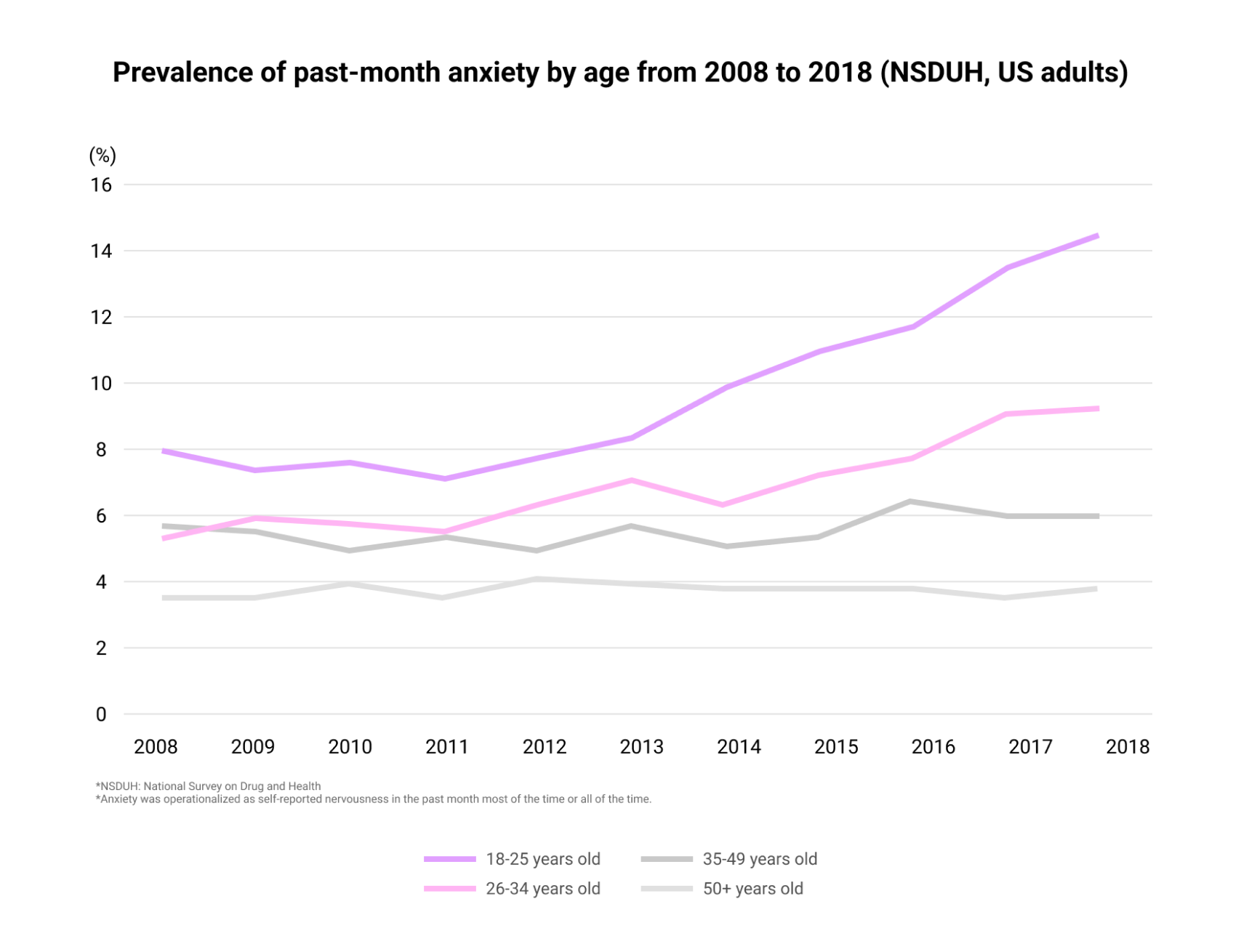
According to Data from the National Survey on Drug Use and Health (NSDUH), significant increases in trends in anxiety were noted among 18 to 25-year-old respondents and 26 to 34 and 35 to 49-year-old respondents in the United States. The increase was significantly more rapid among those ages 18–25 years, 7.97% in 2008 versus 14.66% in 2018 reported anxiety.

Moreover, because of the COVID-19 pandemic, coping with mental health issues is the biggest challenge to young adults confronting financial pressures, social isolations and uncertainty.

How can we support those people with mental health issues live a better life.

User Survey

We created and distributed a survey consisted of questions about mental health using Google Forms. 75 people in South Korea responded to the survey for three days and the respondents were relatively young, 88% were in the 20-29 years old. Also, 77.3% of them were women. Most of them were students and office workers.

80% of respondents said they feel depressed.

According to the survey, 80% of the respondents answered that they usually felt depressed and 67% responded that they got stressed nearly twice a week or never thought about that. In addition, 77.3% of respondents to our questionnaire replied they were interested in managing mental health while most people didn’t know how to manange it.

77.3% of respondents said they are interested in mental health care.

Nearly half of the respondents answered that they usually exercised to relieve stress and 25.8% of them replied they preferred keeping a journal for mental health.

25.8% of respondents said they are keeping a diary for their mental health.

Affinity Map

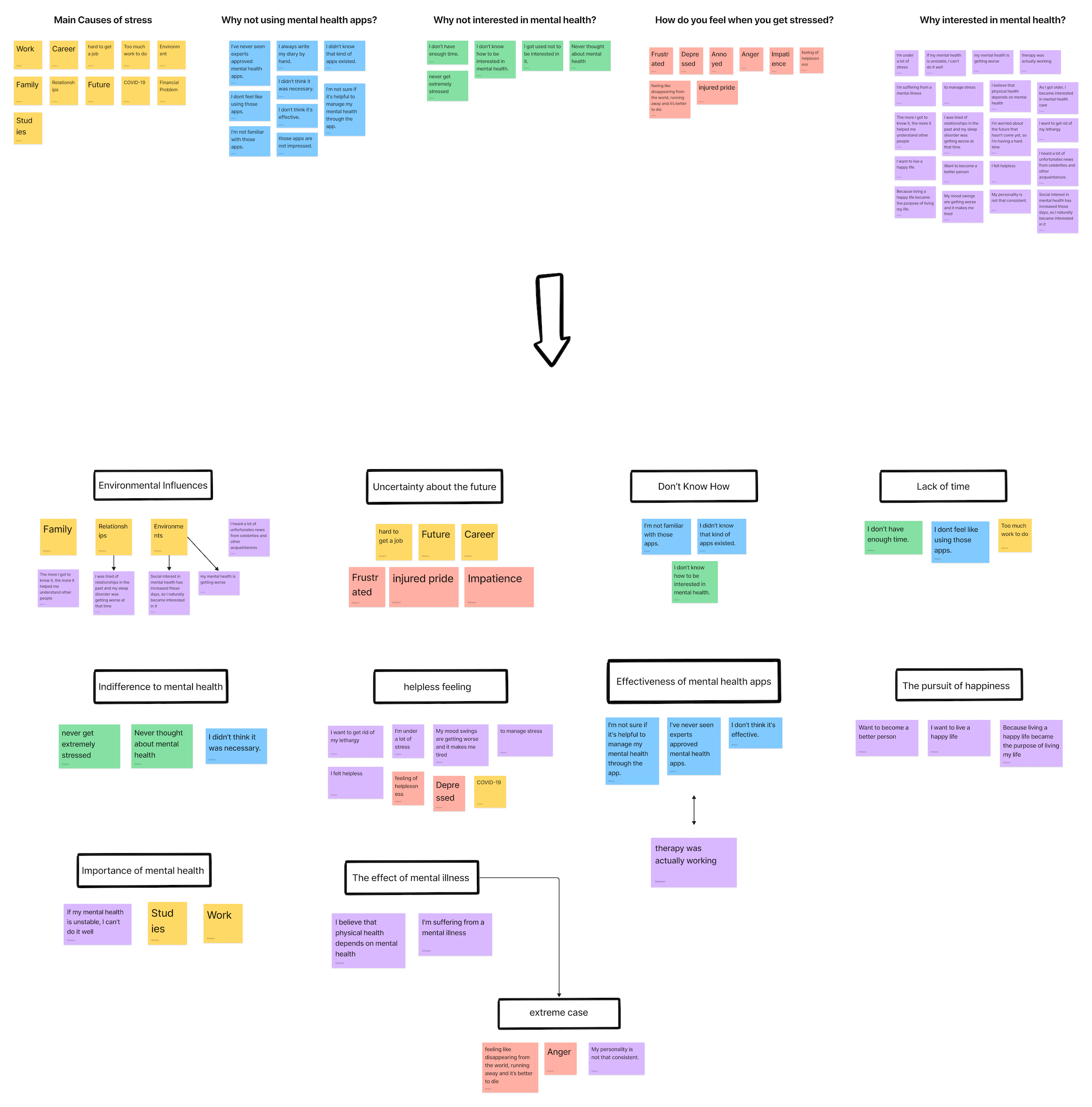
After the survey, we gathered qualitative information from the questionnaire and grouped it by new categories to find deeper insights.

Insights

  • Most of young adults usually feel depressed and helpless.
  • They are interested in mental health but don’t know how to manage it.
  • Some people feel uncertain about effectiveness of mental health apps but others don’t.
  • It’s crucial to help people deal with stress.
Define

Problems

  • Young adults feel depressed and helpless these days.
  • Many people are interested in managing mental health but don’t know how to do it.

Solutions

  • Offering a short journal app specialized in mood tracking
  • Books and playlists recommendation for relieving stress based on journals
  • Giving a weekly and monthly mood analysis

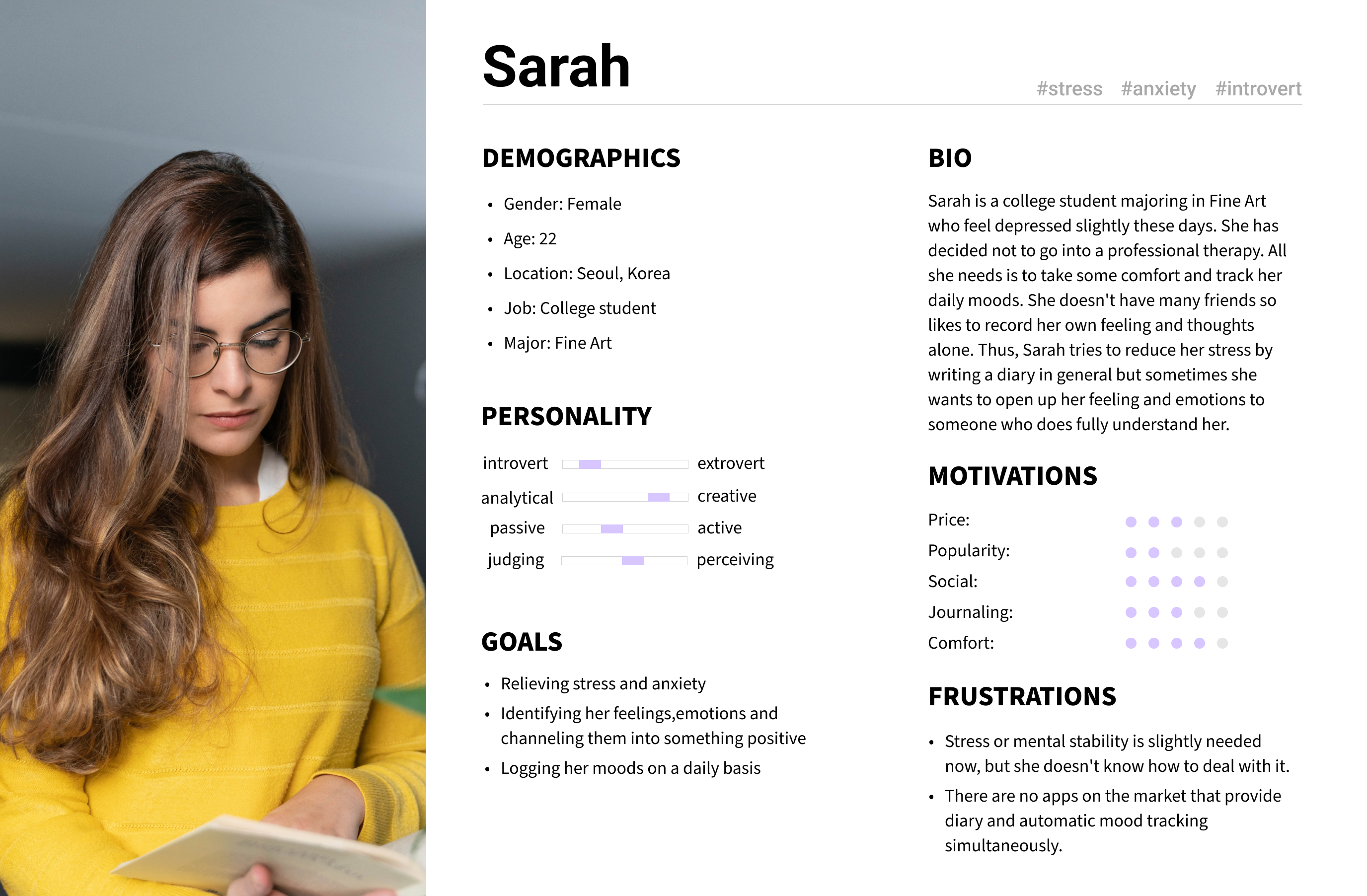
User Persona

The main target is a young adult getting stressed and keeping a journal everyday. We created one persona based on the user survey.

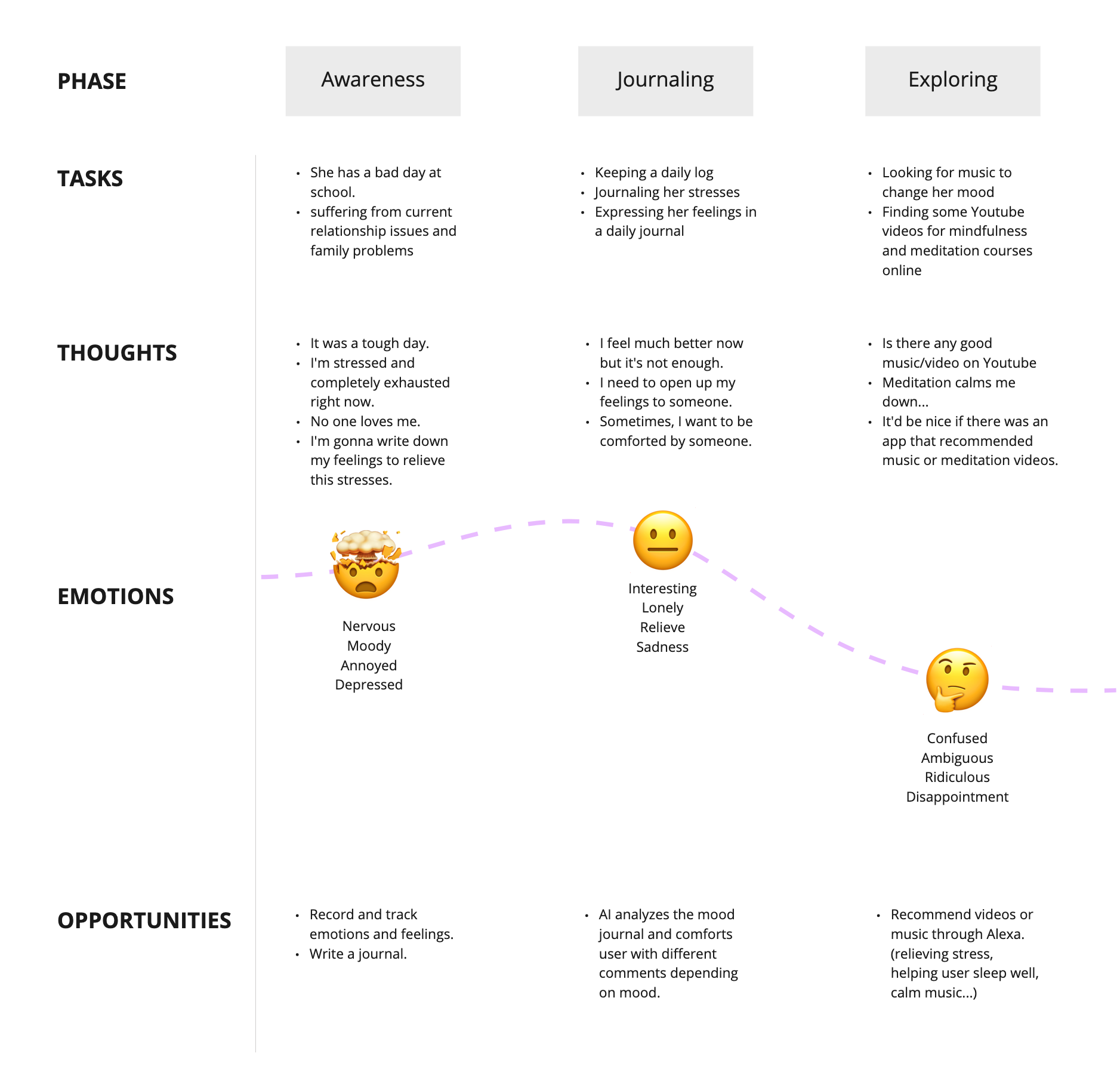
User Journey

Journey Map are created according to one persona into three stages and analyze their emotions, thoughts and opportunities.

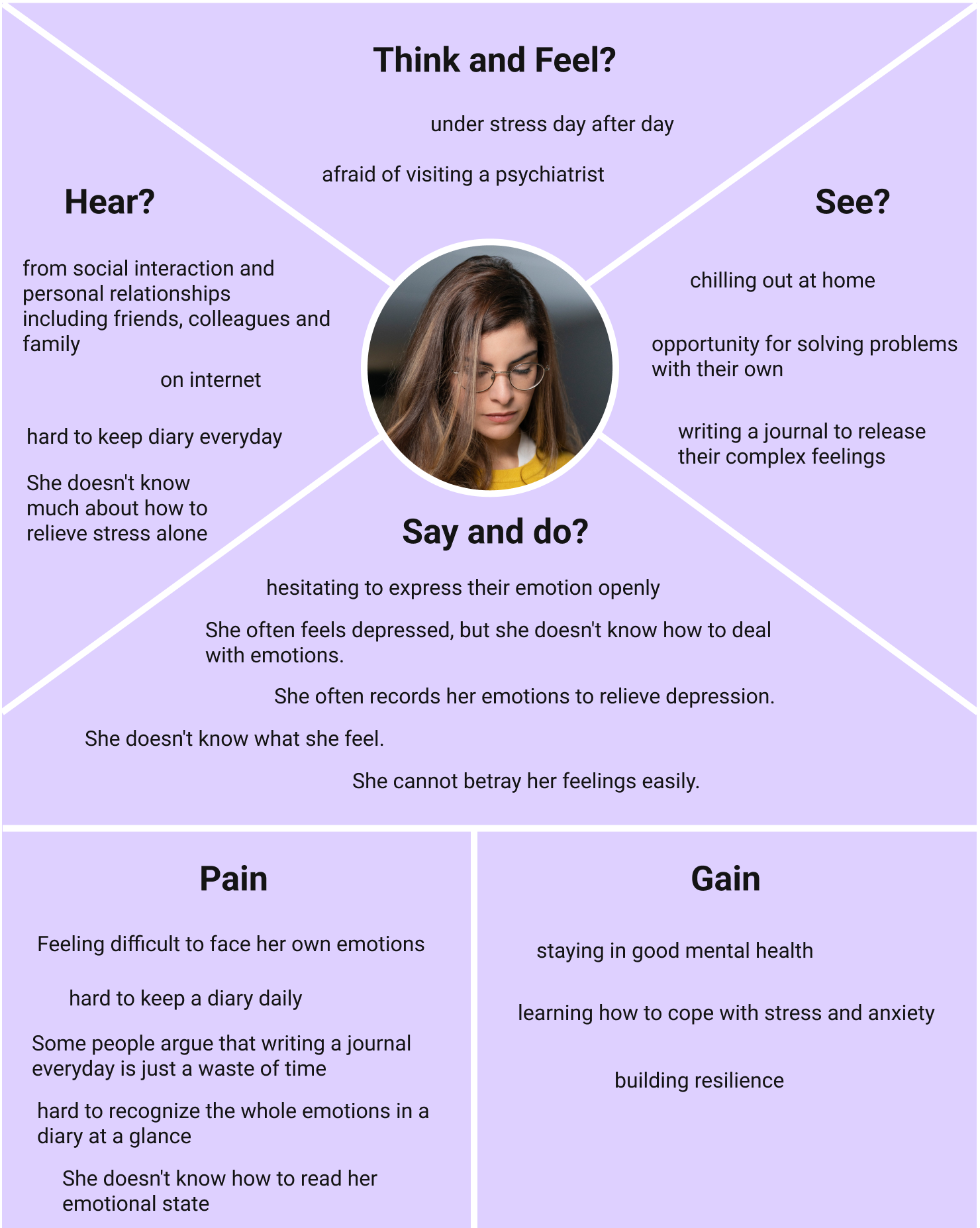
Empathy Map

We tried to understand the user through this mapping. It could be inferred that people under stress should build resilience to stressful circumstances and have a tendency to record their feeling everyday.

How might we give our users some comfort and make them relieve stress?

And how might we help them to track their own mood easily?

Ideate

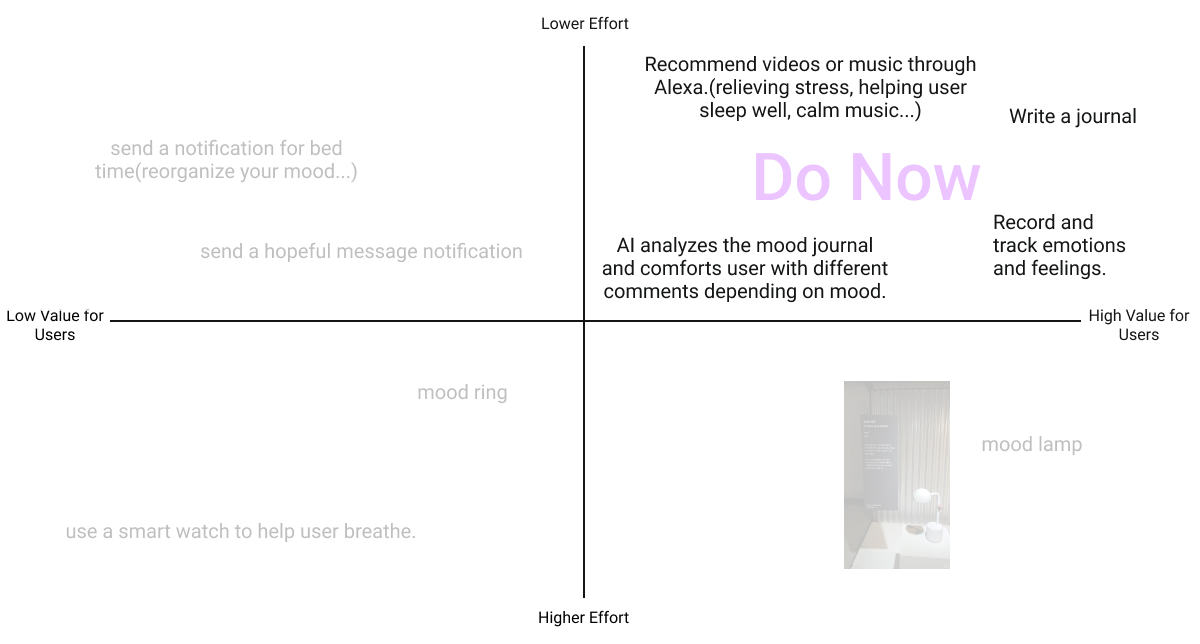
2X2 Matrix

We used 2X2 Matrix to find the best solution that we could make. After the process, we found that writing a journal and tracking feelings had a high value for users. Connecting with AI speakers recommending videos or music immediately might be the next great choice to make people relieve stress. Comforting users with positive comments depending on moods was also considered as a important trait of our upcoming app.
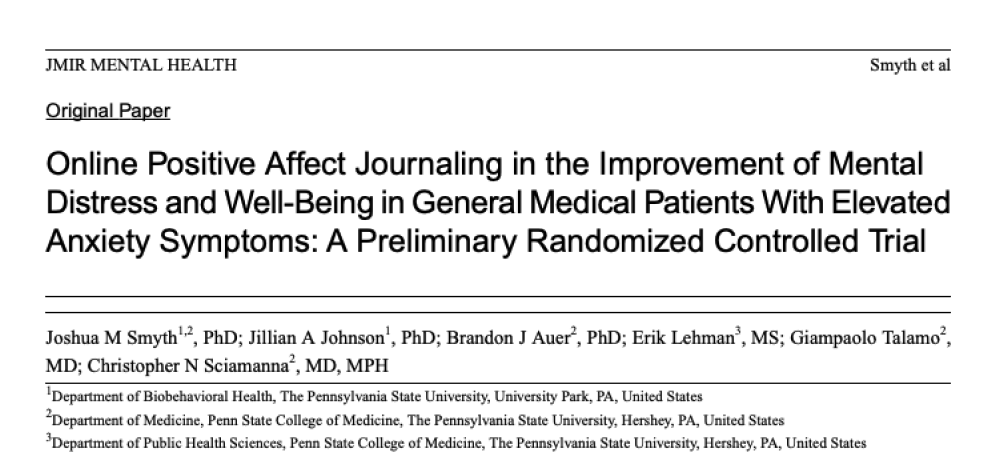
Next, we wanted to make sure that keeping a journal could help people with stress, depression and anxiety. In order to verify our prediction, we found some research about a correlation between keeping a diary and mental health. As a consequence, it was confirmed that web-based journal therapy actually helped managing symptoms and improving their mood.

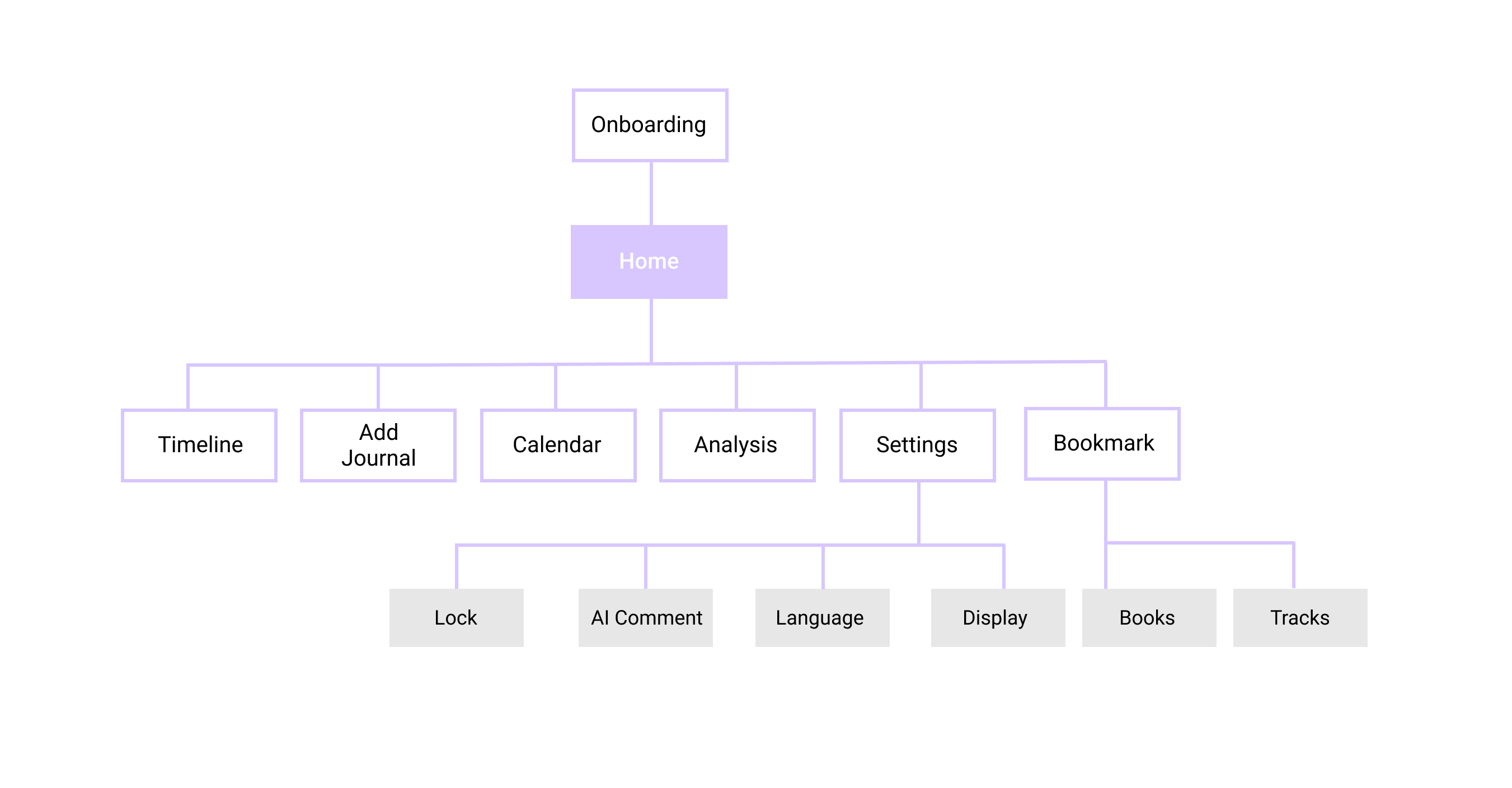
Information Architecture

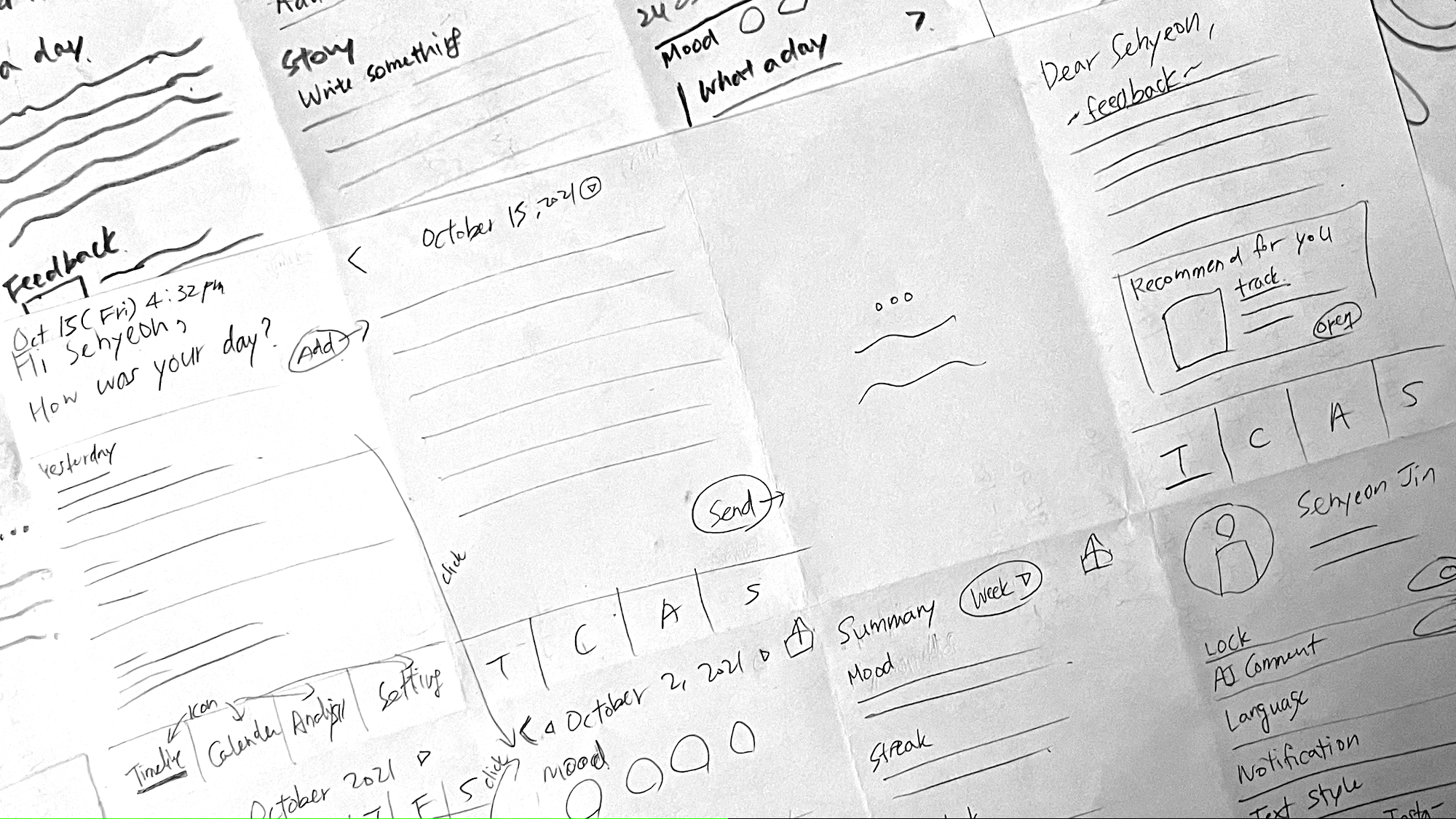
Sketches: Crazy 8’s

We sketched out our app screens and components fast to make a good decision in design. Through this process, we found a variety of solutions.

Develop

Branding

Mooday is a combination of two words, 'mood' and 'day'. It represents our goal, 'improving your mood through journaling everyday'. We used Fredoka One font for the logo and sub-mark below.

Primary Logo

Sub-mark

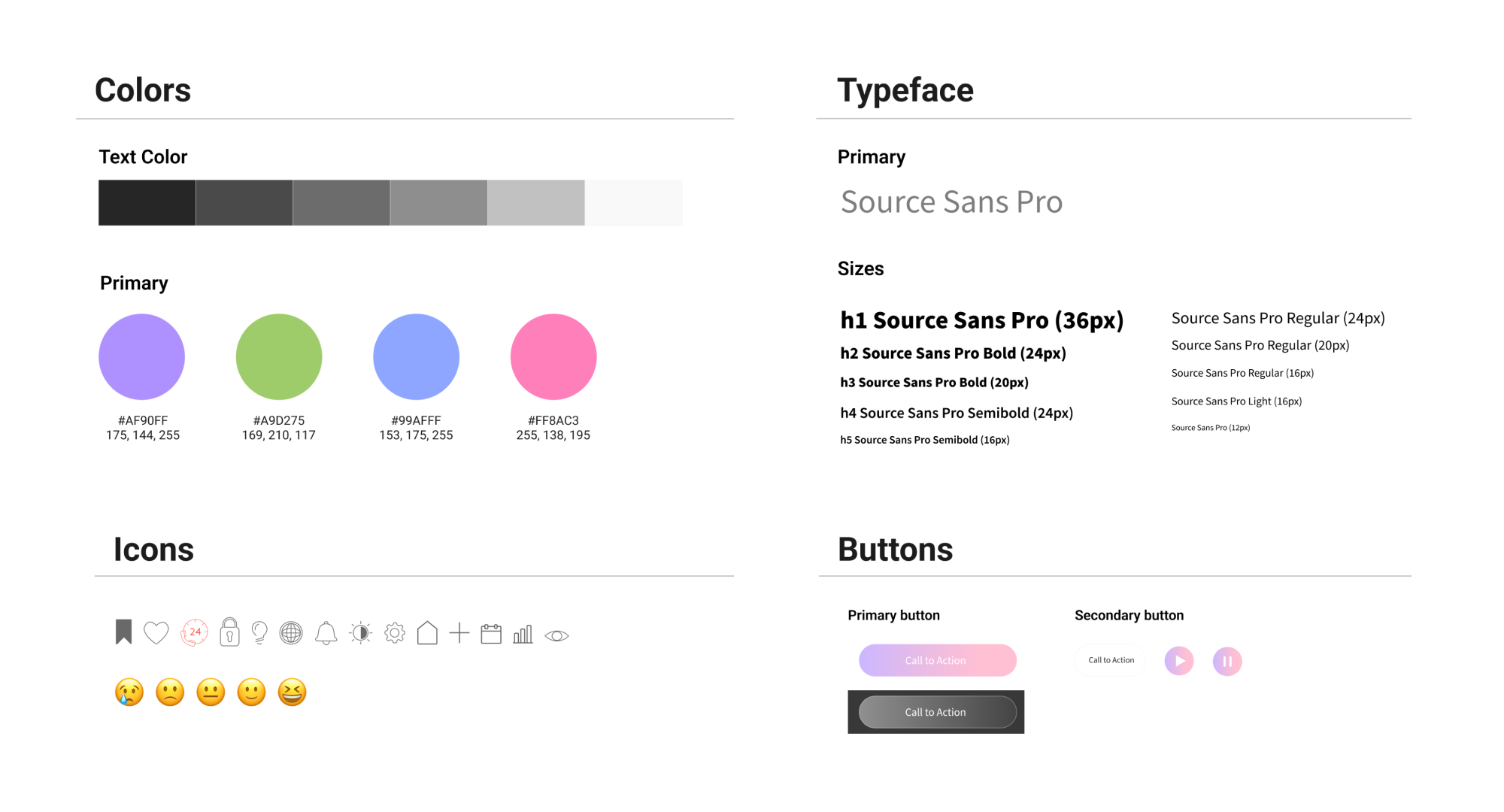
Style guide

Source Sans Pro was used primarily because the font was extremely versatile and renders very well at small sizes. Also, we applied light colors to make them pop on the screen and light pink and purple gradient to our primary and secondary buttons.

Low Fidelity Wireframes

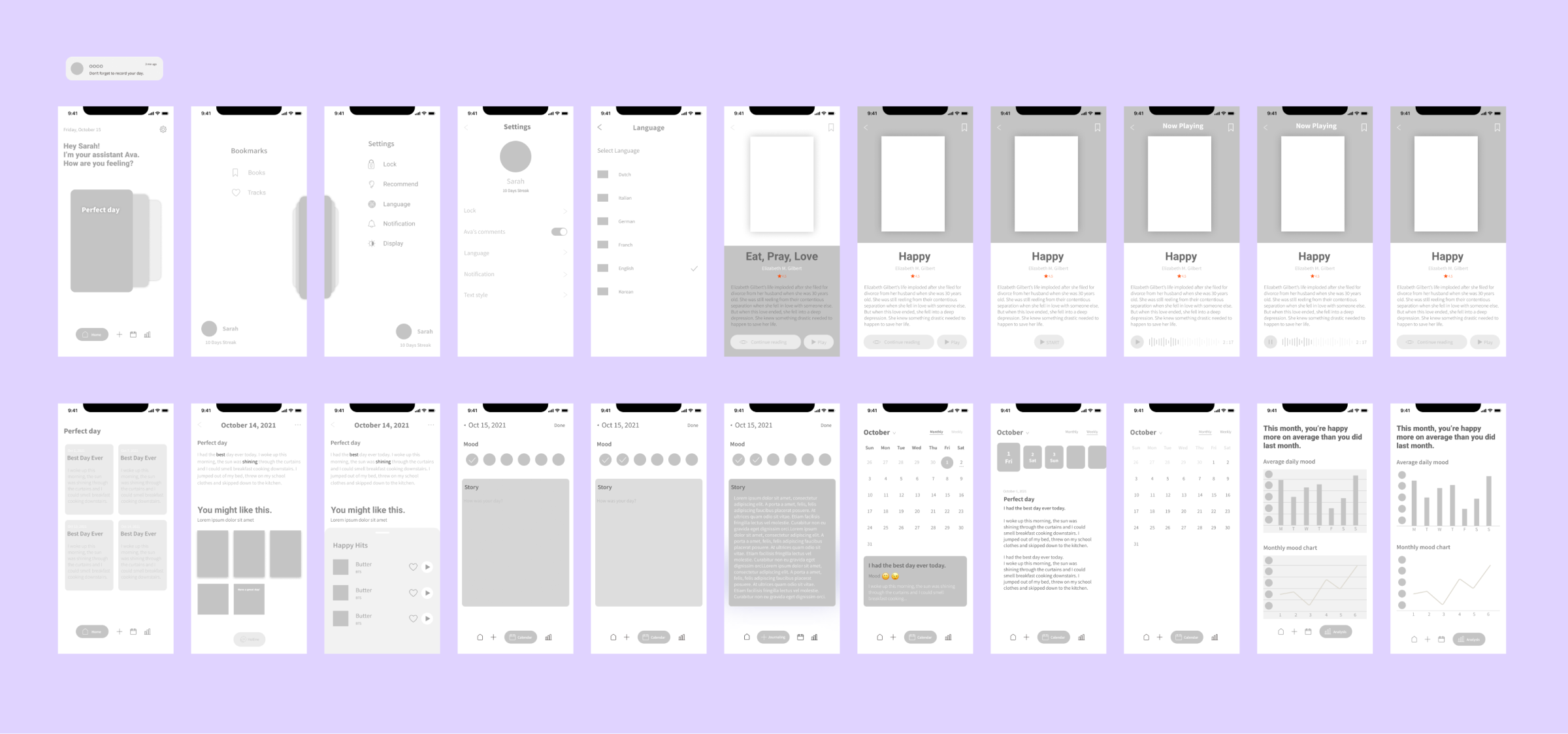
We started making a wireframe with low-fidelity in Figma based on sketches to prototype.

High Fidelity Design

Based on low-fidelity wireframes, we created two types of high-fidelity design in Figma.

Why Dark Mode?

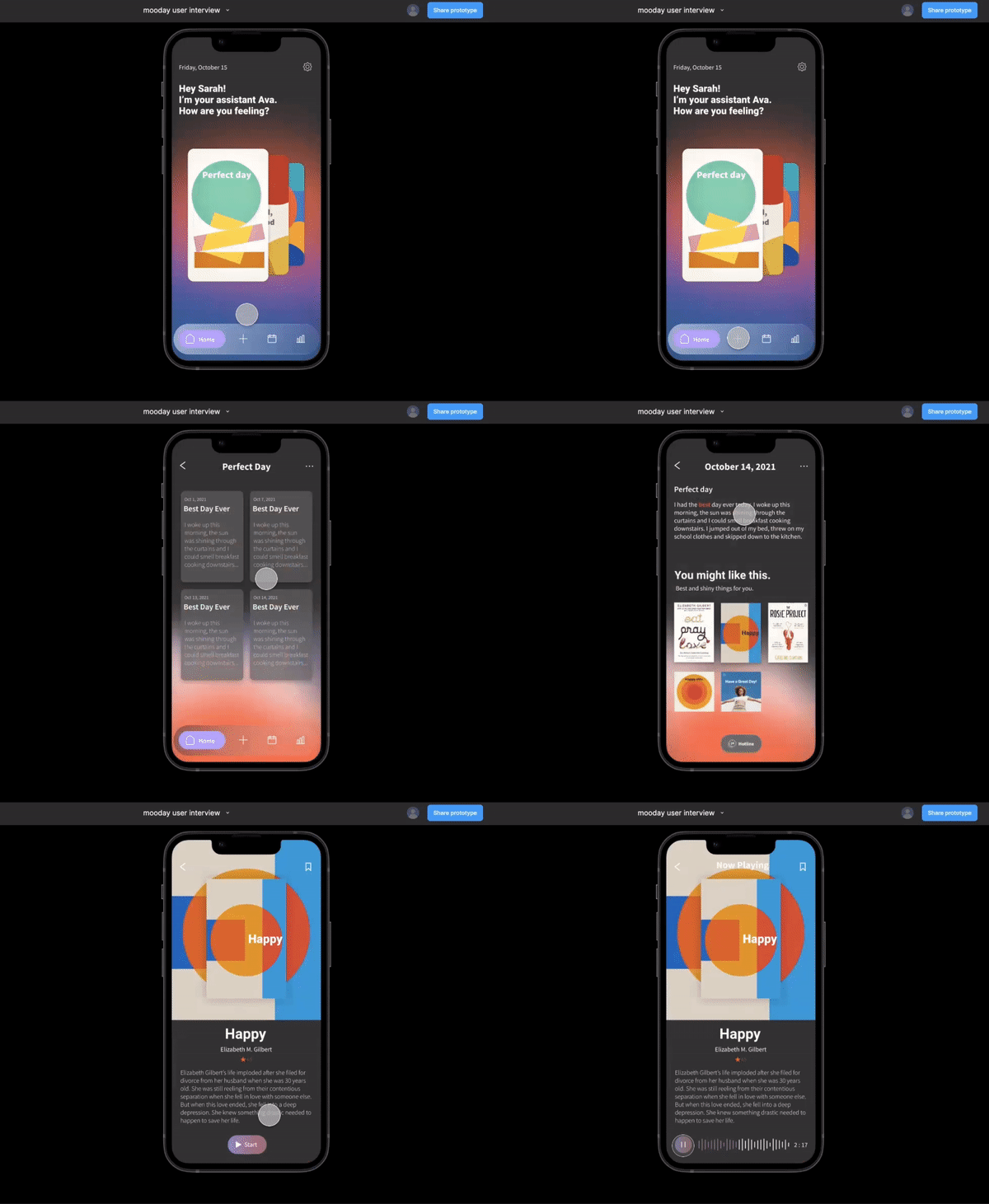
We thought our users might use this app before bedtime so the dark mode was made. Using devices emitting blue light at night may increase your alertness, making it harder for you to fall asleep. Since dark mode aims to reduce blue light, it may be especially beneficial at night. It may also be easier to read, especially when you’re in a room with the lights off.

Prototyping

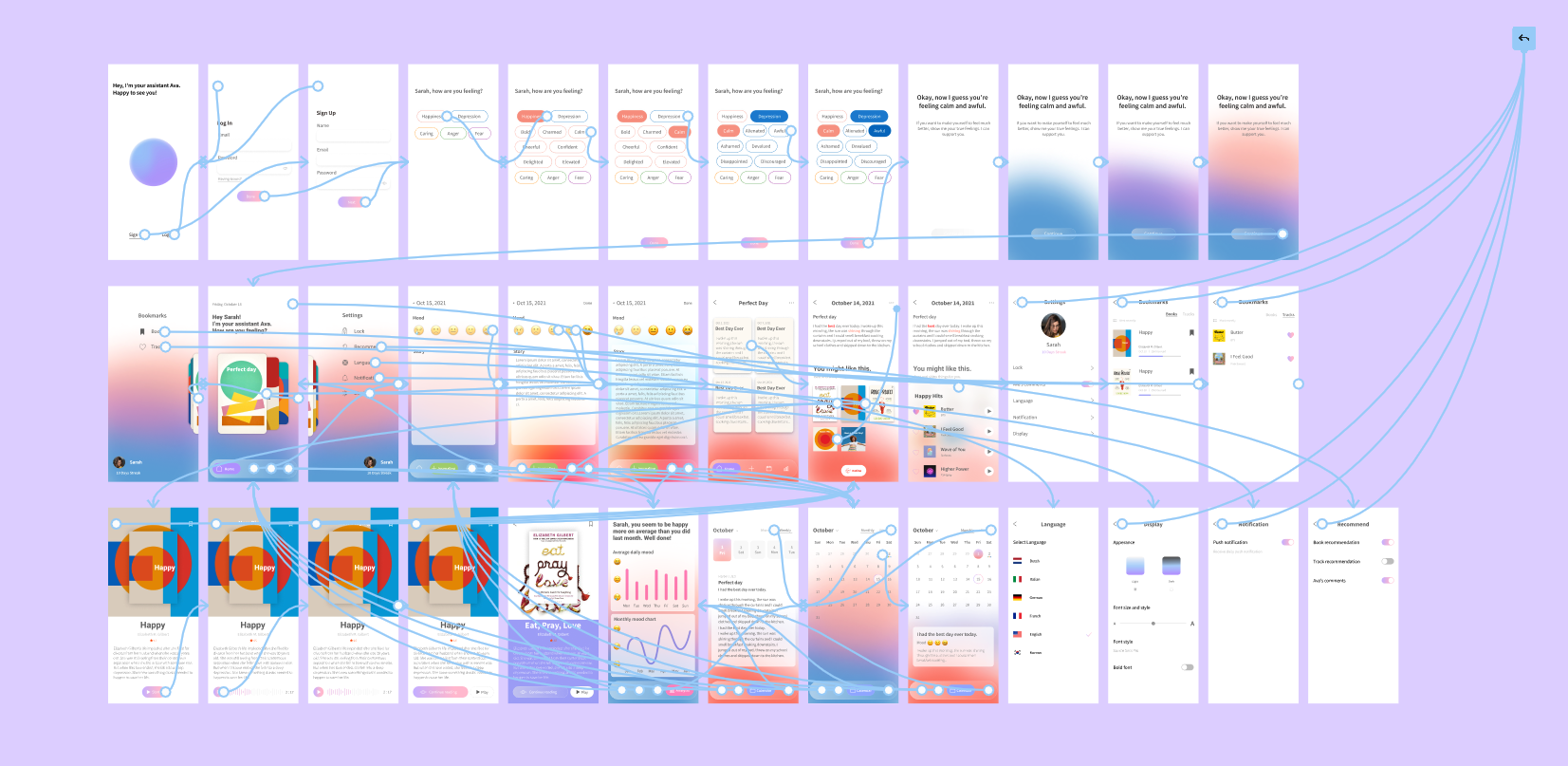
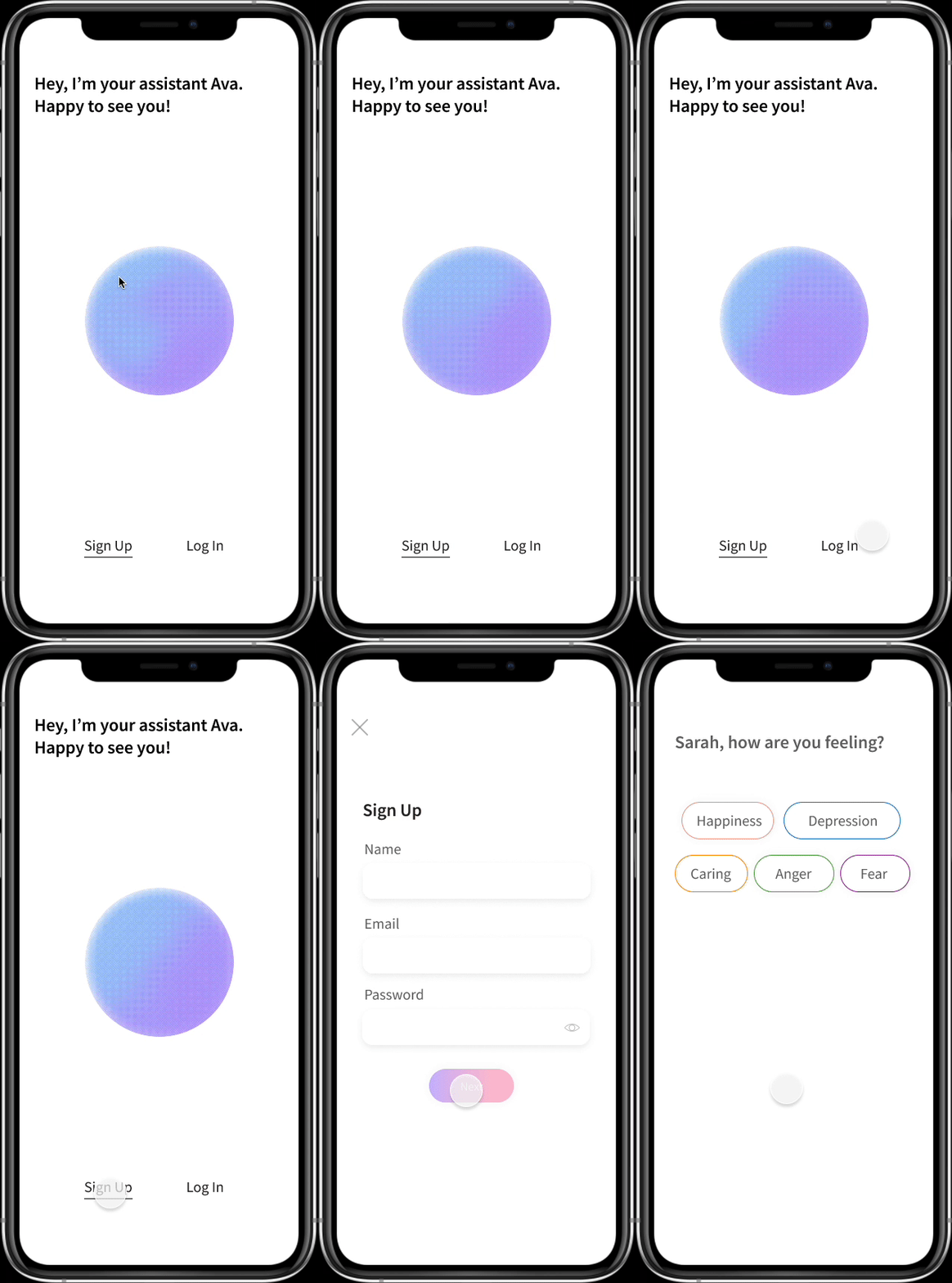
We connected the whole pages of our apps and added interactions to prototype perfectly.

Motion Design

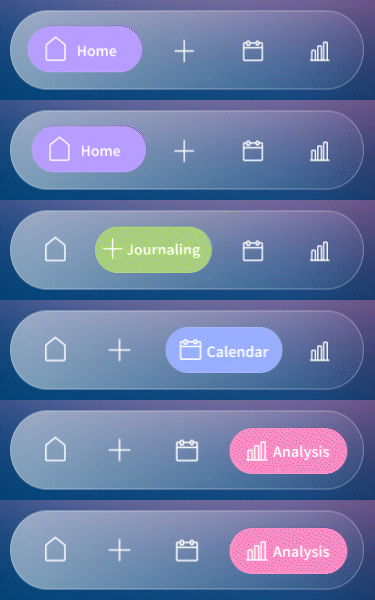
Bottom Navigation Bar

When a bottom navigation icon is tapped, the user is taken to the top-level navigation destination associated with that icon.

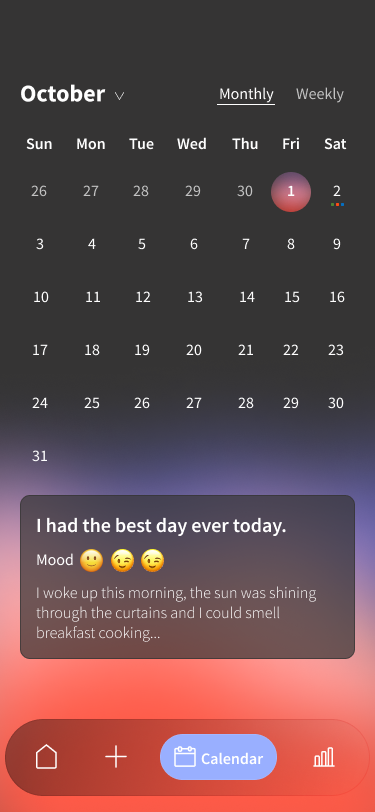
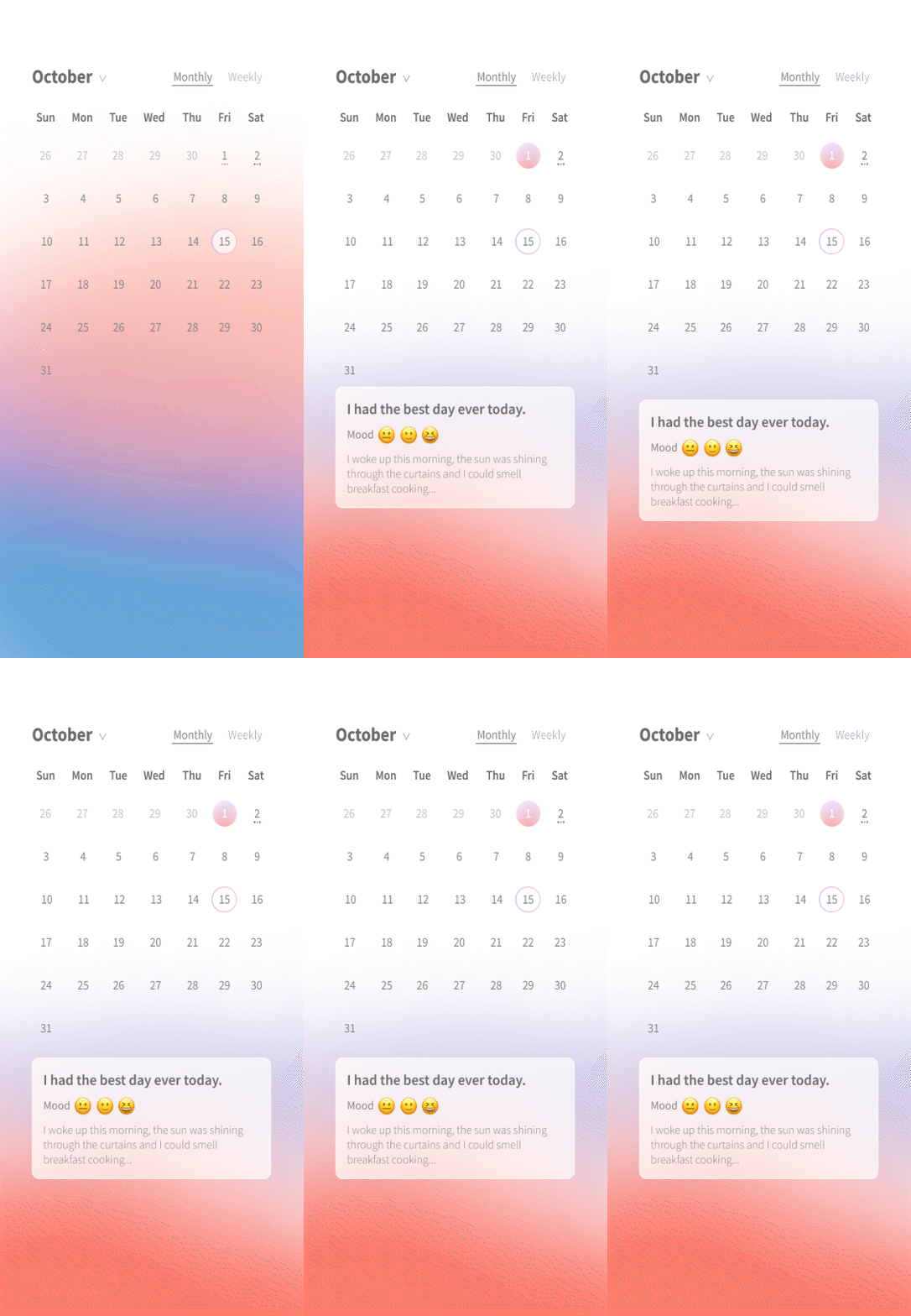
Calendar Interaction

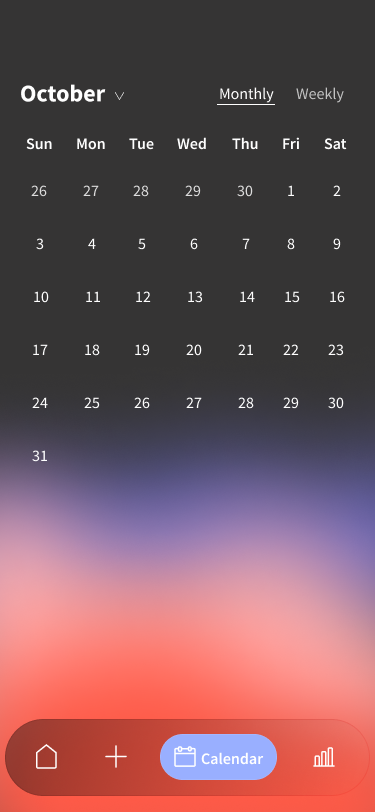
When users touch a specific day, the current mood colors disappear and other colors that represent the moods and a journal of that day are shown immediately.

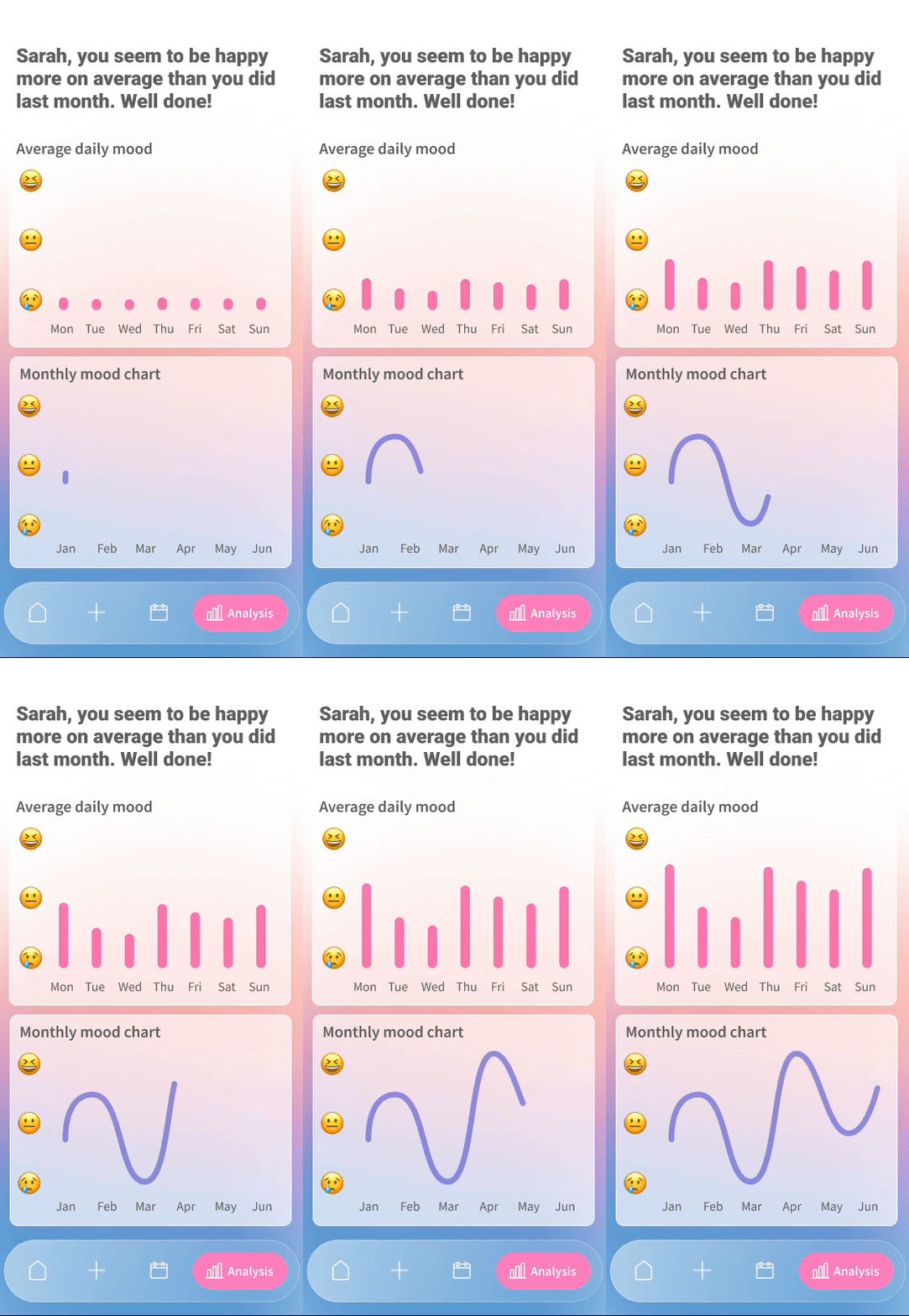
Animated Charts

We wanted to make this page more enjoyable so that added animation in charts.

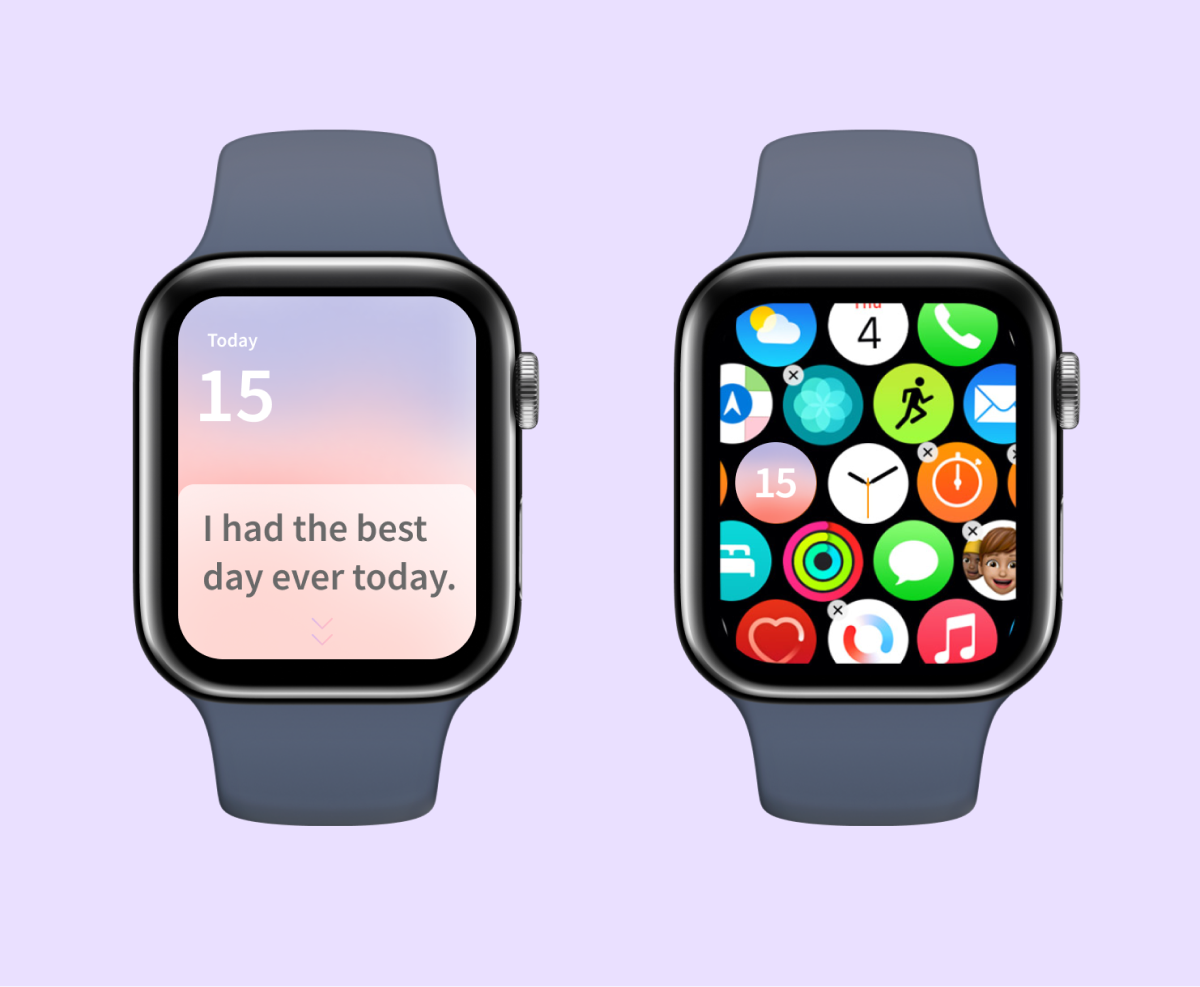
Watch Interface Design

We also designed watch interface because our service were expected to be used like a watchface for users. They could use our service to know mood and find a proper recommendation of the day on their own watch.

Test

Remote User Testing

Under the covid-19 pandemic, we couldn’t help conducting remote user testing using Zoom and Figma Prototyping Tool and prepared some task-based questions focusing on five process and features. All tests were recorded.
We recruited two participants in their twenties. The first participant liked journaling by hand and recording a piece of her events. She had tried to write a diary using a journal app once, but did not used this app anymore because all journals were not able to get restored when she deleted them.Other participant also liked to write a mood journal at night and posted her daily life like a journal on instagram stories sometimes.
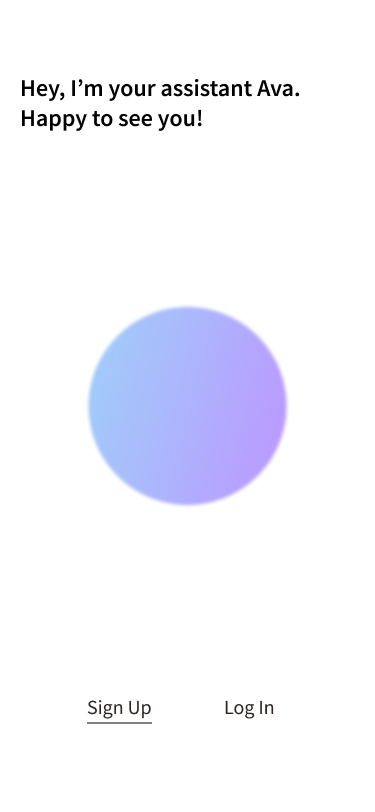
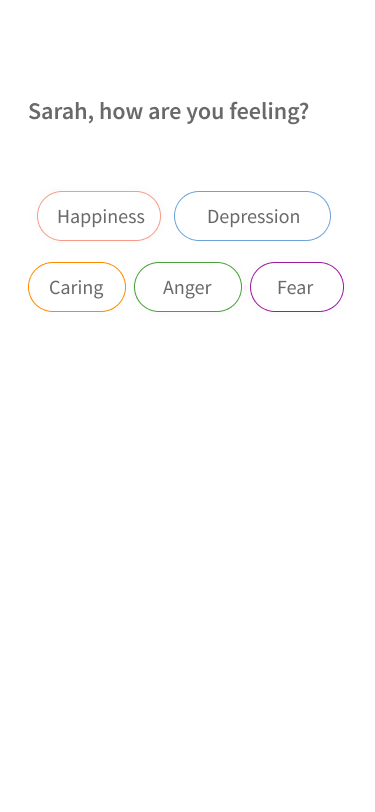
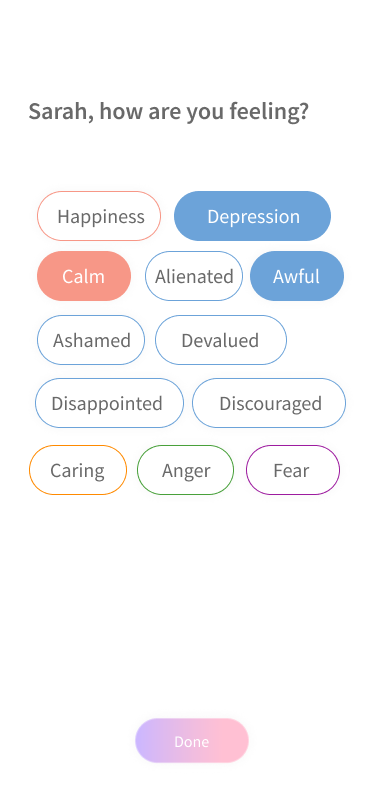
They both liked the onboarding process, answered that sign up and log in button were seemed well and whole process was easy to follow and quite intuitive. Next, the first participant liked backgrounds that colors are changed depending on mood selection in journaling process. However, she were confused whether should press one or several mood emojis. The second participant answered sad emoji was first seen on the journaling page and it would be nice that done button to go down. Both replied that whole page was easy to understand and well designed for short journals.
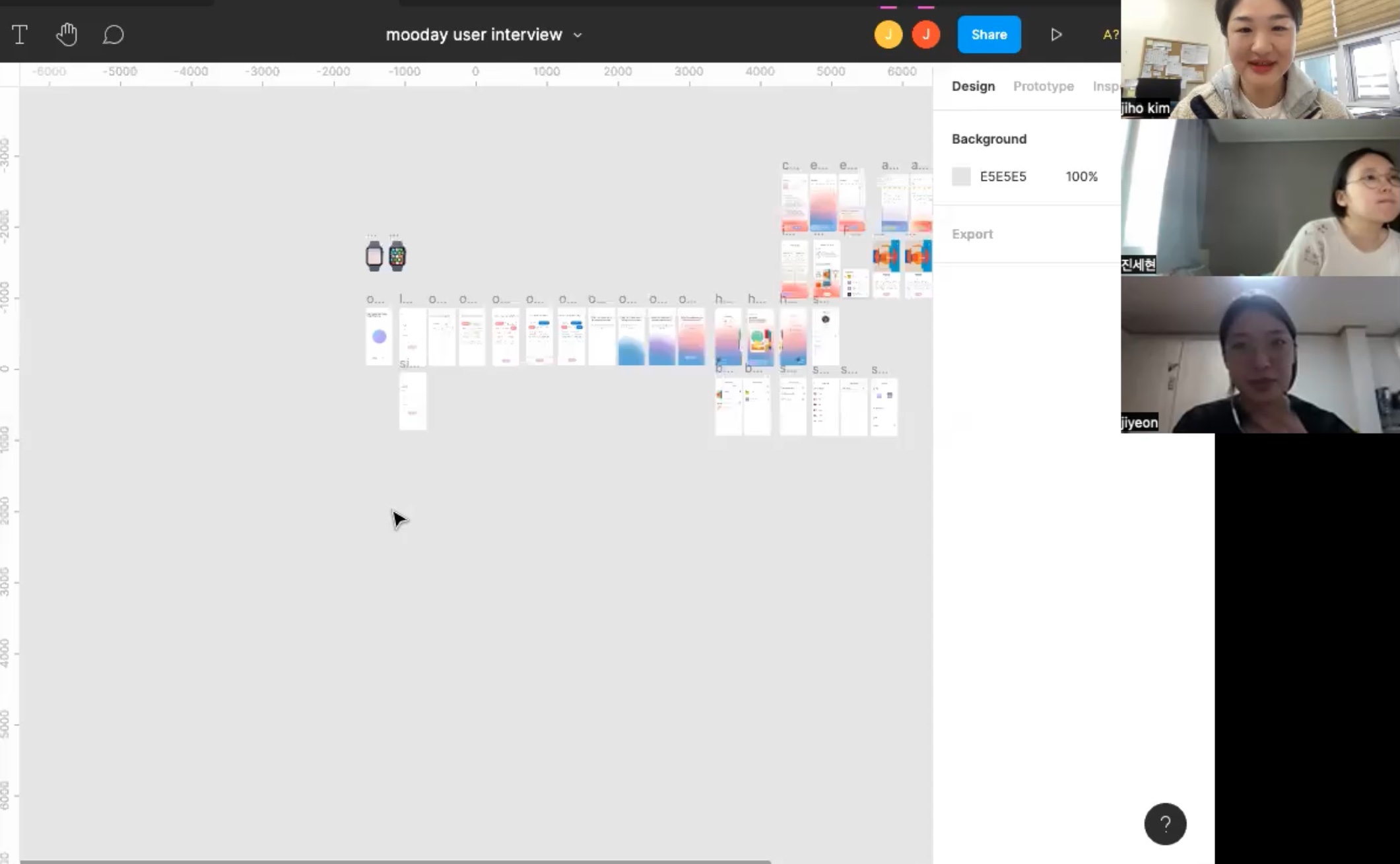
Moreover, Both responded quite positively to our AI recommendation feature and design, but one respondant was little worried about a privacy issue. The analysis page was received a positive response from them, they answered that the page was intuitive and useful and the feature that mood data are automatically updated. The second participant said dark mode might be better with low in saturation and darken colors and watch feature was not that necessary but responded the interface was well designed. She was also interested in using our watchface. Overall, Both said the whole process and design were well satisfied and intended to use the app if writing a journal often.

Reflection

What I Learned

We've learned that user survey and testing are the keys to make a good product. If there were not any clarification from users, the product couldn't reflect what users want. It was also the first time we made a dark mode so that we realized the importance of dark mode in an ergonomic way. These experiences may help us to design products more user centric.

Next Step

There are some points to improve such as privacy issue and journaling process so that we will iterate the process, find a better solution and redesign the interface. Moreover, since the mental health issue is much getting bigger these days, we will continuously try to improve our product in order to support people who have struggled to deal with mental health problems.

More Projects

Kiddiez

Service Design

The Underdog Uprising

Data Analytics

Spotify for the HOH

App Redesign

The Trevor Project

Web Responsive Design